 4.9 (349 Reviews)

Arborist & Plant Health Care
Best Arborist and Plant Healthcare Services
Caring For Texas Shrubs & Trees Since 1990
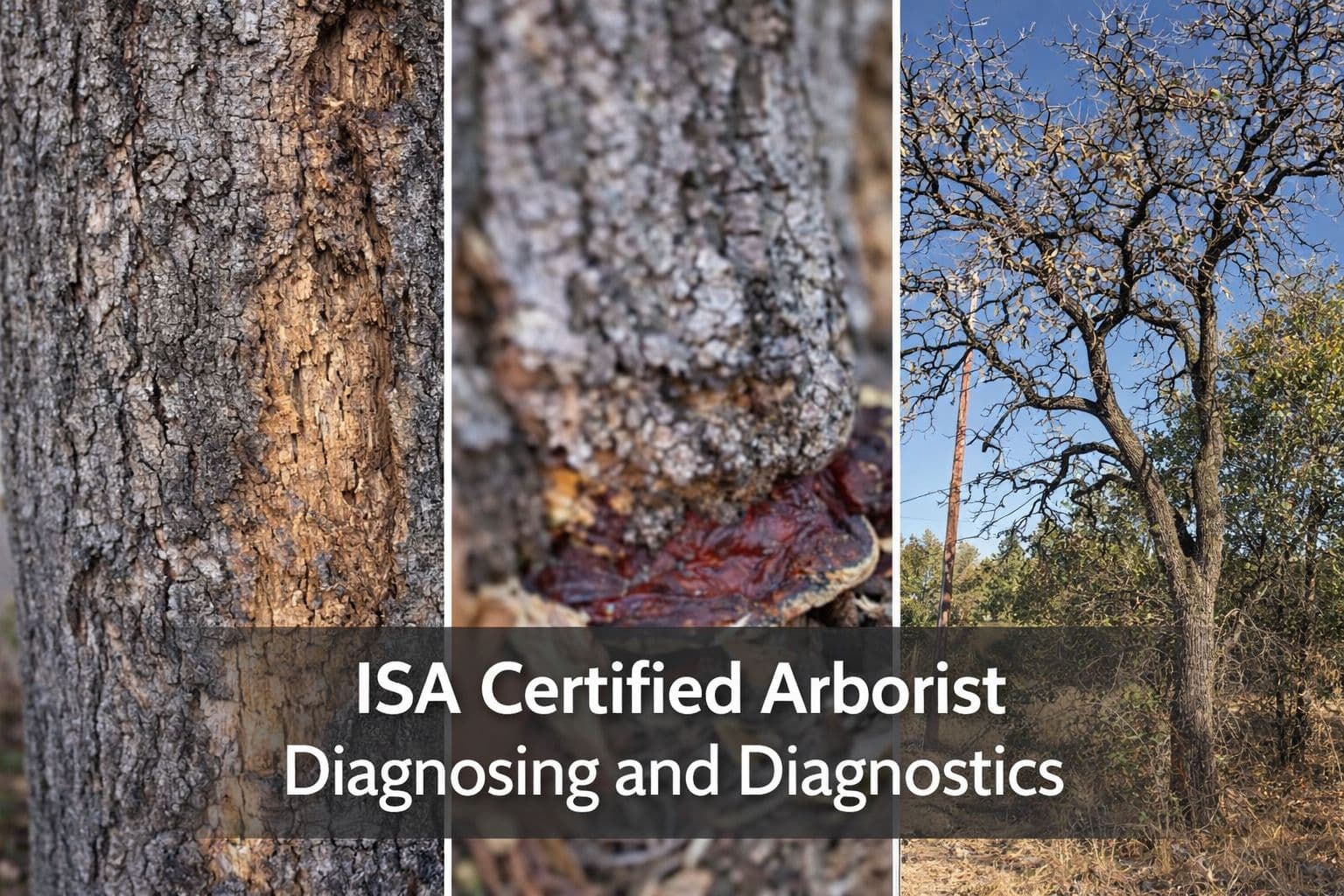
ISA Certified Arborist in Dallas–Fort Worth (DFW)
Science-Based Tree Diagnosis, Risk Assessment, and Plant Health Care
Arborist USA provides ISA Certified Arborist in DFW, TX; contact us at (817) 880-6130 for a Free Quote.
Homeowners and property managers across the Dallas–Fort Worth Metroplex are often told they need a “tree service.” In reality, many tree problems in North Texas are not cutting problems — they are biological, structural, or environmental issues that require diagnosis before action.
This page explains what an ISA Certified Arborist does in DFW, how professional diagnosis differs from general tree services, and why standards-based arboriculture matters in a region with oak wilt pressure, expansive clay soils, extreme heat, and freeze events.
What an ISA Certified Arborist Means in DFW
An ISA Certified Arborist is a professional tested and certified by the International Society of Arboriculture in tree biology, soil science, pruning standards, pest and disease diagnosis, and risk assessment.
According to the International Society of Arboriculture (ISA), certification requires demonstrated knowledge in tree structure, physiology, diagnosis, and management — not just equipment operation.
In North Texas, this distinction is critical. Many companies offer tree services, but only certified arborists are trained to evaluate why a tree is declining, not just how to remove or prune it.
Why Dallas–Fort Worth Trees Require Diagnosis First
The DFW region presents a unique combination of stressors that directly impact tree health:
- Highly alkaline, compacted clay soils
- Repeated drought–flood cycles
- High summer temperatures exceeding 100°F
- Freeze events dropping below 15°F
- High incidence of oak wilt and wood-decay fungi
According to Texas A&M AgriLife, soil compaction and poor oxygen exchange are among the most common contributors to tree decline in urban Texas landscapes. Reduced soil oxygen can lower root respiration efficiency by 50–80%, leading to chronic stress.
Without diagnosis, pruning or removal decisions are often made incorrectly — sometimes accelerating decline rather than preventing it.
Arborist USA’s Diagnostic Approach in DFW
Arborist USA operates as a diagnosis-first arboriculture practice, not a removal-first tree service.
Our evaluations are performed by ISA Certified Arborists and follow ANSI A300 standards, focusing on identifying the primary stressors affecting each tree.
Step 1 – Symptom vs. Cause Analysis
Visible symptoms such as canopy thinning, leaf scorch, dieback, sap flow, or fungal growth are not diagnoses. They are indicators.
According to ISA guidance, effective tree care begins by separating symptoms from causes, which may include:
- Root hypoxia from compaction or oversaturation
- Vascular disruption from pathogens such as Bretziella fagacearum (oak wilt)
- Structural defects and internal decay
- Sunscald and thermal bark injury
- Secondary insect pressure exploiting stress
Step 2 – Standards-Aligned Risk and Health Evaluation
When structural concerns are present, assessments align with ISA Tree Risk Assessment principles by evaluating:
- Likelihood of failure
- Likelihood of impact
- Consequences of failure
This framework allows informed decision-making rather than reactive cutting.
According to ANSI A300, pruning or removal should only occur after proper evaluation of tree structure, biology, and site conditions.
Step 3 – CODIT and Long-Term Tree Survival
Trees do not heal wounds. They compartmentalize them.
The CODIT model (Compartmentalization of Decay in Trees), developed by Alex Shigo, explains how trees resist decay using four walls:
- Walls 1–3 slow internal decay spread
- Wall 4 forms a barrier zone of new tissue
Successful formation of Wall 4 (woundwood) is a key indicator of long-term survival potential.
Our recommendations prioritize reducing ongoing stress so woundwood formation can outpace decay progression, rather than relying on ineffective wound dressings or unnecessary removals.
Oak Wilt, Decay, and DFW-Specific Risks
DFW is a recognized oak wilt hot zone.
According to Texas A&M Forest Service, oak wilt can spread through root grafts at rates of up to 100 feet per year in live oak stands if unmanaged.
Improper pruning, especially during high-risk periods, can dramatically increase transmission risk.
This is why ANSI A300-compliant pruning practices and timing matter — and why uncertified tree services pose a significant risk in oak-dense neighborhoods.
Why “Tree Service” & “Arborist” Are Not the Same
Many national and regional companies advertise tree care, but the depth of evaluation varies significantly.
General tree services often focus on:
- Removal
- Trimming for clearance
- Storm cleanup
Arborist-led practices focus on:
- Diagnosis
- Preservation
- Risk mitigation
- Long-term canopy stability
For homeowners seeking to preserve valuable trees, this distinction often determines whether a tree survives or declines.
When to Call an ISA Certified Arborist in DFW
You should seek an arborist evaluation if you notice:
- Sudden canopy decline
- Cracking or sunscald on trunks
- Fungal growth at the base of trees
- Repeated pest activity
- Trees impacted by construction or grade changes
- Post-freeze or post-storm damage
Early assessment significantly improves outcomes and reduces long-term costs.
Arborist-Led Tree Care in Dallas–Fort Worth
Dallas–Fort Worth trees face complex environmental pressures that cannot be solved with one-size-fits-all services.
According to ISA and ANSI A300 standards, informed diagnosis, standards-aligned practices, and ongoing monitoring are essential for tree longevity and public safety.
Arborist USA provides ISA Certified Arborist evaluations across the DFW Metroplex, delivering science-based recommendations rooted in professional standards, not guesswork.
If you need an ISA Certified Arborist in DFW, TX, please get in touch with Arborist USA today by calling us at (817) 880-6130.
Our Reviews
Here's What People Say About Us

A+ BBB Rating based on 31 BBB Reviews
4.8/5.0 based on 83 Top Rated Local Reviews
4.6/5.0 based on 36 Facebook Reviews
4.0/5.0 based on 4 Trust Pilot Reviews

4.9/5.0 based on 129 Google Reviews
4.5/5.0 based on 14 Yelp Reviews
31 Recommendations on Nextdoor
Total Reviews: 349  Verified Customer Reviews
Locations
Common Areas Served
Tree Care and Tree Services in all of North Texas.