 4.9 (349 Reviews)
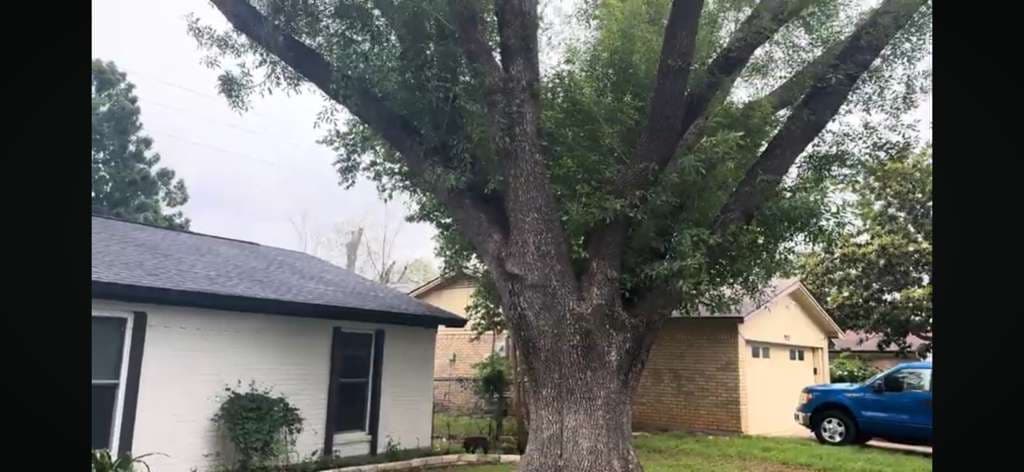
Emerald Ash Borer treatment and structural pruning for Texas Ash Trees in Bedford, Texas. Large mature ash trees across North Texas continue to suffer from long-term environmental stress following the devastating 2021 winter freeze. In Bedford, we recently inspected a very large mature Texas Ash tree (Fraxinus texensis) with an estimated DBH of approximately 120 inches. Despite substantial scaffold branch dieback from the freeze event, the tree still showed strong structural integrity overall.
The primary concern on this project was not immediate catastrophic failure, but rather long-term canopy decline combined with the increasing threat of Emerald Ash Borer pest pressure.
During the tree risk assessment, we observed that many of the unions and branch junctions remained structurally sound despite extensive dead tissue throughout portions of the crown. The tree currently presents a relatively low probability of failure under normal environmental conditions. However, because of the tree’s massive size and its proximity to the homestead, the impact zone would be considered severe during a major storm event, high-wind event, or “Act of God” scenario.
Our objective is to preserve and restore this mature ash tree through ANSI A300 structural pruning, crown reduction, crown cleaning, crown raising, and a science-based plant healthcare program focused on stimulating new epicormic growth and rebuilding canopy density.
The Lasting Effects of the 2021 Texas Freeze on Ash Trees
The 2021 winter freeze created catastrophic stress across hardwood populations throughout Texas. Ash trees were among the many species affected by rapid temperature fluctuations, cellular dehydration, vascular injury, and cambial stress.
Texas A&M AgriLife Extension has documented widespread freeze injury throughout North Texas following the February 2021 event. Freeze damage commonly leads to:
Common Freeze Damage Symptoms in Ash Trees
- Scaffold branch dieback
- Twig mortality
- Cambial injury
- Vascular disruption
- Bark cracking
- Delayed canopy thinning
- Epicormic sprouting
- Progressive crown decline
Many mature ash trees initially survived the freeze but slowly declined over several growing seasons. This delayed response occurs because trees often use stored carbohydrate reserves to survive after severe stress. Once those reserves become depleted, canopy thinning and dieback become more visible.
On this Bedford property, the tree still retains strong structural potential despite substantial deadwood throughout portions of the canopy.
Structural Pruning According to ANSI A300 Standards
Our mitigation strategy for this Texas Ash focuses heavily on structural pruning following ANSI A300 pruning standards.
The purpose of structural pruning is not cosmetic. Proper structural pruning improves load distribution, reduces mechanical stress, removes compromised tissue, and promotes safer branch architecture over time.
Structural Pruning Objectives on This Bedford Project
- Removal of dead scaffold branches
- Crown cleaning of necrotic tissue
- Structural reduction of compromised limbs
- Crown raising over the structure
- Reduction of end weight on weakened branches
- Improved canopy balance
- Reduced wind sail effect
- Improved long-term survivability
According to ISA and TCIA best management practices, dead and compromised branches should be mitigated before failure occurs, especially when target zones include homes, structures, driveways, or pedestrian areas.
Although the probability of immediate failure on this tree appears relatively low, the consequences of failure would be severe because of the size of the scaffold branches and proximity to the homestead.
Why We Are Trying to Preserve This Mature Texas Ash
Large mature ash trees provide substantial environmental and economic value.
Mature ash trees contribute:
- Shade reduction and cooling
- Carbon sequestration
- Stormwater mitigation
- Wildlife habitat
- Increased property value
- Reduced urban heat island effect
Removing a mature ash tree of this size would dramatically alter the landscape and microenvironment of the property.
Because the primary unions and branch attachments still appear structurally viable, preservation is currently a realistic option.
However, the biggest long-term threat to this tree may not be freeze damage alone.
The larger concern moving forward is Emerald Ash Borer.
What Is Emerald Ash Borer?
Emerald Ash Borer (Agrilus planipennis) is an invasive wood-boring beetle responsible for killing hundreds of millions of ash trees across North America.
The insect is native to Asia and was first identified in the United States in 2002. Since then, it has spread aggressively through ash populations across multiple states, including Texas.
Texas A&M Forest Service and the USDA have identified Emerald Ash Borer as one of the most destructive invasive forest insects in North America.
Why Emerald Ash Borer Is So Dangerous
The adult beetle itself causes relatively little damage. The real destruction occurs during the larval stage.
After eggs are laid on the bark surface, larvae hatch and tunnel beneath the bark into the phloem and cambial region of the tree.
These larvae create serpentine galleries that disrupt:
- Water transport
- Nutrient transport
- Carbohydrate movement
- Cambial function
- Overall vascular health
Once the vascular system becomes compromised, canopy decline accelerates rapidly.
How Emerald Ash Borer Kills Ash Trees
Ash trees rely on healthy vascular tissue to move water and carbohydrates between the roots and canopy.
Emerald Ash Borer larvae destroy this transport system from beneath the bark.
Over time, the galleries effectively girdle portions of the tree.
Common Symptoms of Emerald Ash Borer
- Canopy thinning
- Progressive dieback
- Epicormic shoots
- Bark splitting
- D-shaped exit holes
- Increased woodpecker activity
- Sparse foliage
- Branch mortality from the top downward
One of the dangerous aspects of Emerald Ash Borer infestation is that symptoms often appear after the infestation is already well established internally.
By the time major canopy decline becomes visible, significant vascular damage may already exist beneath the bark.
Why Freeze-Stressed Ash Trees Become More Vulnerable
Stress physiology plays a major role in pest susceptibility.
Trees weakened by drought, freeze damage, root stress, compaction, or nutrient deficiency are often less capable of defending themselves against insect attacks.
ISA research has consistently shown that stressed trees are more vulnerable to secondary pest pressure and opportunistic pathogens.
The 2021 freeze created substantial physiological stress on ash populations throughout North Texas.
That stress may increase susceptibility to:
- Emerald Ash Borer
- Secondary borers
- Fungal pathogens
- Root decline organisms
- Carbohydrate depletion
This is why proper plant healthcare becomes critically important following severe environmental stress events.
Plant Healthcare Program for Recovery and Canopy Restoration
Following structural pruning, we will implement a comprehensive plant healthcare program focused on rebuilding canopy density and stimulating new epicormic growth.
Epicormic growth occurs when dormant buds activate beneath the bark following stress or canopy loss.
When managed properly, epicormic growth can help rebuild interior canopy density over time.
Our Plant Healthcare Protocol Includes
- 21% high-nitrogen fertilization
- NutriRoot applications
- Root stimulation treatments
- Micronutrient support
- Soil biology improvement
- Monitoring for Emerald Ash Borer activity
- Long-term canopy management
Nitrogen plays a major role in chlorophyll production and vegetative growth. When used properly within a balanced plant healthcare strategy, nitrogen can help stimulate foliage development and canopy recovery.
NutriRoot applications help support root vigor, nutrient uptake, and overall stress recovery.
The objective is not simply rapid growth. The objective is controlled recovery with improved canopy density and long-term structural management.
Tree Risk Assessment Findings
During this assessment, we observed:
- Significant deadwood throughout portions of the crown
- Freeze-related dieback on scaffold branches
- Structurally sound unions and branch attachments
- Overall healthy trunk integrity
- Low immediate probability of failure
- Severe target impact potential due to proximity to the home
This is an important distinction in tree risk assessment.
A tree may have visible defects without being categorized as an imminent hazard.
According to ISA Tree Risk Assessment principles, risk is based on:
- Likelihood of failure
- Likelihood of impact
- Consequences of failure
Although failure potential currently appears manageable, the consequences of a major scaffold branch failure over the homestead would be substantial.
This is why proactive mitigation through structural pruning is recommended.
Why Bedford and North Texas Ash Trees Need Monitoring
Ash trees throughout Bedford, Euless, Hurst, Colleyville, Grapevine, and surrounding North Texas communities should be monitored carefully moving forward.
The combination of:
- Freeze stress
- Urban stress
- Soil compaction
- Heat stress
- Emerald Ash Borer expansion
creates a difficult environment for mature ash trees.
Early detection and proactive management are critical.
Final Thoughts
This Bedford, Texas, ash tree still has significant preservation potential despite freeze-related dieback from the 2021 winter storm.
By combining ANSI A300 structural pruning with a science-based plant healthcare program, we are attempting to preserve the tree’s structure, reduce risk, and stimulate healthier interior canopy development moving forward.
The long-term concern remains Emerald Ash Borer pest pressure, which continues to threaten ash populations across Texas and the United States.
This is why monitoring, structural management, and proactive plant healthcare are so important for mature ash preservation.
At Arborist USA, our goal is not simply to remove trees. Our goal is to properly diagnose stress conditions, reduce risk, preserve valuable canopy where possible, and create long-term management strategies rooted in TCIA and Texas A&M science-based practices.
For general tree-care best practices, homeowners can also reference guidance from the Texas A&M Forest Service, https://tfsweb.tamu.edu/trees/, a trusted authority on Texas tree health.
Schedule a professional inspection. Early detection and scientific intervention are the difference between preservation and loss. If you’d like to speak to an arborist, please call us at 817-880-6130 or visit https://www.arboristusa.com/