 4.9 (349 Reviews)
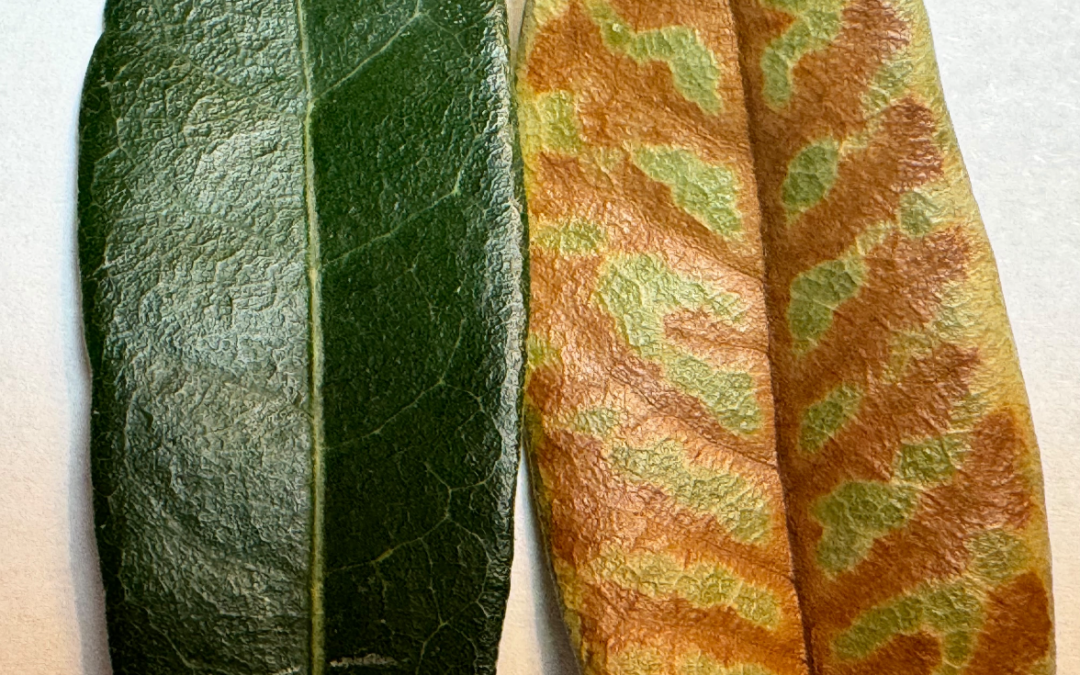
Today we’re in Southlake, Texas, looking closely at one of the most serious diseases we encounter in oak populations: Oak Wilt.
One of the reasons Oak Wilt deserves so much attention is that this is not simply a disease affecting individual leaves or branches. Oak Wilt is a systemic vascular disease caused by the fungal pathogen Bretziella fagacearum. The pathogen invades the tree’s xylem—the vascular tissue responsible for transporting water from the root system into the crown. Texas A&M Forest Service describes Oak Wilt as one of the most destructive tree diseases in the United States.
For homeowners in Southlake and throughout North Texas, early identification matters because once Oak Wilt becomes established within a group of interconnected Live Oaks, management becomes considerably more difficult.
What Is Oak Wilt?
Oak Wilt is an infectious vascular disease affecting trees in the genus Quercus.
Once the fungus enters a susceptible oak, it colonizes the water-conducting xylem. The tree responds to the infection by plugging portions of its vascular system. Unfortunately, that defensive response further restricts water movement to the canopy.
The result can look very similar to severe drought stress: wilting, discoloration, premature leaf drop, canopy thinning and eventually tree mortality.
This is why simply seeing brown leaves is not enough to diagnose Oak Wilt. We need to look at the pattern of symptoms, species involved, progression across the property, neighboring trees and—when necessary—laboratory diagnostics.
H2: Identifying Oak Wilt Symptoms in Southern Live Oaks
One of the most valuable diagnostic clues on a Live Oak is found in the leaf itself.
Veinal Necrosis — A Major Diagnostic Indicator
Look closely at the vascular pattern of a Southern Live Oak leaf.
A healthy leaf has a prominent midrib with secondary veins branching outward and a network of smaller veins throughout the leaf.
With Oak Wilt, Texas A&M Forest Service identifies veinal necrosis as an important foliar symptom in Live Oaks. Veins may initially become yellow or chlorotic and subsequently turn brown and necrotic.
This can create a very distinctive appearance:
Brown or reddish-brown tissue follows the veins while portions of the tissue between the veins may remain green.
That distinction is important.
We’re not simply looking at a brown leaf. We’re looking at where the discoloration is occurring in relation to the vascular system.
Premature Leaf Drop
Another warning sign is rapid or abnormal defoliation.
Texas A&M notes that infected Live Oaks may shed leaves rapidly, sometimes while significant portions of the leaves are still green. Leaves displaying brown veins can remain underneath an infected tree after defoliation.
However, seasonal Live Oak leaf exchange can sometimes be confused with disease symptoms, particularly during spring.
That is why Oak Wilt diagnosis should never be based on one symptom alone.
How Does Oak Wilt Get Into a Property?
There are two major pathways we need to understand:
Above ground — insect transmission.
Below ground — interconnected roots.
Those two pathways explain why one infected tree can eventually become a much larger property-wide problem.
Sap-Feeding Beetles Can Start a New Oak Wilt Infection Center
The Role of Red Oaks
Red Oaks play an especially important role in establishing new Oak Wilt infection centers.
Certain diseased Red Oaks can develop fungal spore mats underneath their bark. These mats produce an odor that attracts small sap-feeding insects, particularly nitidulid sap beetles.
The beetles visit the fungal mats and can acquire fungal spores.
The beetle can then move to another oak.
If that second tree has a fresh wound—from pruning, storm damage, construction, lawn equipment or another injury—the beetle may visit that wound and introduce fungal spores.
That can establish an entirely new Oak Wilt infection center.
Why Fresh Oak Wounds Matter
This is exactly why pruning season matters.
Texas A&M Forest Service recommends avoiding unnecessary pruning or wounding of oaks from February through June, when conditions favor fungal mat production and insect activity. Texas A&M also recommends painting fresh oak wounds immediately, regardless of the time of year.
For Southlake homeowners, this is an important preventive practice.
Oak Wilt prevention starts before the disease reaches the property.
Once Oak Wilt Reaches a Live Oak, the Root System Becomes the Bigger Problem
This is where Oak Wilt management becomes difficult.
Southern Live Oaks can develop extensive interconnected root systems. Roots from neighboring trees may naturally connect through root grafts.
Once that happens, what appears above ground to be several individual trees may effectively have underground vascular connections.
Root-Graft Transmission
Oak Wilt can move from an infected Live Oak into neighboring Live Oaks through these interconnected roots.
Texas A&M reports that underground transmission through root systems is responsible for much of the spread and mortality associated with Live Oak infection centers in Texas, with infection centers averaging about 75 feet of expansion per year, although actual movement varies by site.
This explains a pattern we sometimes see in the field:
One Live Oak declines.
Then another nearby tree begins showing symptoms.
Then another.
The disease can progressively move through the interconnected population.
Why Oak Wilt Becomes Difficult to Control Once It Is Established
By the time obvious canopy symptoms appear, we’re no longer dealing simply with a leaf problem.
We’re dealing with a pathogen operating within a vascular system—and potentially within an interconnected root network beneath the property.
That’s why management requires looking beyond the visibly sick tree.
Removing Diseased Trees Does Not Automatically Stop Underground Transmission
Removal may be appropriate for severely affected or dead trees, particularly diseased Red Oaks that could become sources of fungal mats.
But removing the visible tree alone does not necessarily mean the underground disease pathway has been eliminated.
Where root transmission is occurring, Texas A&M identifies root disruption—typically trenching or other root-severing measures—as one of the primary management strategies. Fungicide treatment of selected high-value trees may also be incorporated into an integrated management program.
That means the strategy has to be based on the entire infection center—not simply the first tree showing symptoms.
Can Oak Wilt Be Cured?
There is currently no treatment that simply cures Oak Wilt and removes the pathogen from an infected tree.
Texas A&M describes three major management approaches:
preventing new infection centers,
disrupting underground root transmission,
and treating selected high-value trees with systemic fungicide.
Propiconazole Treatment
Systemic fungicide containing propiconazole can be used in appropriate situations to protect selected high-value oaks and reduce crown loss.
This is important terminology:
We should not tell homeowners that we are “curing” Oak Wilt.
The objective is disease management and protection of appropriate trees.
And fungicide treatment protects the individual treated tree; it does not create a barrier underground that automatically stops the fungus from moving through interconnected untreated roots.
Arborist USA Oak Wilt Protocol in Southlake, Texas
When we encounter a suspected Oak Wilt situation, our first objective is diagnosis.
We evaluate:
the species involved,
leaf symptoms,
veinal necrosis,
canopy decline,
premature defoliation,
distribution of symptomatic trees,
proximity of neighboring Live Oaks,
potential root connections,
recent pruning or wounds,
nearby Red Oak mortality,
and the progression of symptoms across the property.
When the diagnosis is uncertain, laboratory confirmation may become an important part of the process.
Protect the Trees That Are Still Healthy
Once an infection center is identified, the focus shifts toward protecting the remaining valuable trees and limiting additional spread.
Depending upon the property, that may involve a combination of:
removing appropriate diseased trees, disrupting root connections where feasible, preventive systemic fungicide treatment of selected trees, immediately painting fresh oak wounds, properly handling potentially infected Red Oak wood, and continued monitoring of surrounding oaks.
There is no single prescription that fits every property.
Root configuration, species, soil depth, tree spacing, construction, utilities, neighboring properties and the location of the infection center can all influence the management strategy.
Why Early Identification Matters in Southlake
Southlake has properties with mature oak populations that may represent decades of growth and substantial landscape value.
Once Oak Wilt begins moving through interconnected Live Oaks, replacing those trees is not something that can be accomplished in a few seasons.
That is why we put so much emphasis on prevention and early detection.
If you see unusual leaf discoloration, brown vascular patterns, rapid premature leaf drop or multiple neighboring Live Oaks declining together, don’t automatically assume drought stress.
Look closely at the leaves.
Look at the neighboring trees.
Look at the progression.
And determine whether you’re dealing with an environmental problem—or the beginning of a vascular disease center.
Final Thoughts — Identifying Oak Wilt in Southlake, Texas
Today we’re looking at the tree as a complete biological system.
The leaf gives us clues.
The vascular system gives us clues.
The canopy gives us clues.
But the underground root network may tell us why the problem is moving from one Live Oak to another.
Oak Wilt begins with the fungal pathogen Bretziella fagacearum. Sap-feeding beetles can introduce the fungus into fresh oak wounds and establish new infection centers. Once established in Live Oaks, interconnected roots can allow the pathogen to move underground from tree to tree.
Early identification gives us options. Late identification often leaves us managing losses.
That is why Oak Wilt prevention, proper pruning practices, immediate wound painting, accurate diagnosis and protection of healthy trees are so important for Southlake’s mature oak population.
For general tree-care best practices, homeowners can also reference guidance from the Texas A&M Forest Service, https://tfsweb.tamu.edu/trees/, a trusted authority on Texas tree health.
Schedule a professional inspection. Early detection and scientific intervention are the difference between preservation and loss. If you’d like to speak to an arborist, please call us at 817-880-6130 or visit https://www.arboristusa.com/
Henry G. Friar
ISA Certified Arborist® TX-270627A
Arborist USA — Plant Healthcare Professional
Today, we’re located in Southlake, Texas, examining Southern Live Oak leaves and discussing one of the most important warning signs associated with Oak Wilt — veinal necrosis.
Oak Wilt is a serious vascular disease caused by the fungal pathogen Bretziella fagacearum. The disease interferes with the tree’s water-conducting vascular system and can lead to rapid canopy decline and mortality.
In this video, I show you what we look for in the field, including the difference between a normal Live Oak leaf and a leaf displaying reddish-brown discoloration following the vascular veins.
We also discuss how Oak Wilt spreads.
Sap-feeding nitidulid beetles can carry fungal spores from infected material to fresh wounds on healthy oak trees. Once Oak Wilt becomes established within a population of Live Oaks, the disease can also move underground through interconnected root grafts, allowing it to spread from one tree to another.