 4.9 (349 Reviews)

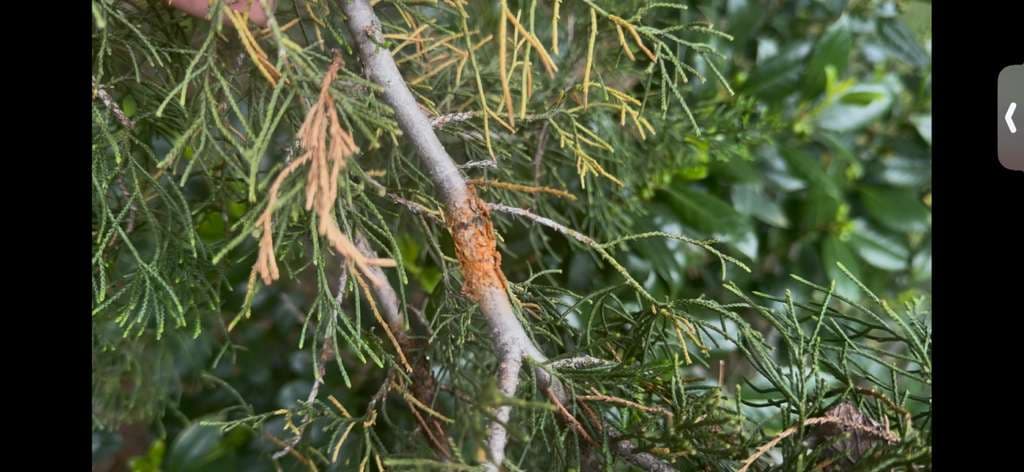
Junipers and Red Mountain Cedars (Juniperus spp.) are widely used across North Texas landscapes because of their drought tolerance and evergreen structure. However, in areas like Little Elm, Texas, we are seeing a growing number of these trees decline due to a combination of fungal pathogens and insect pressure.
On Alexandrite Dr and surrounding neighborhoods, multiple evergreens are showing yellowing, browning, and progressive dieback. After inspection, the primary conditions identified include twig canker associated with Diplodia species and secondary stress from spider mites. These conditions often work together, weakening the tree and accelerating decline.
Understanding Twig Canker and Diplodia
Twig canker is a fungal condition that affects small branches and stems, leading to localized tissue death. In junipers and cedars, one of the most common pathogens involved is Diplodia spp., a fungus that takes advantage of stressed trees.
According to plant pathology principles recognized by Texas A&M AgriLife Extension, Diplodia is an opportunistic fungus. This means it is often present in the environment but becomes aggressive when the tree is weakened by environmental stress.
How Diplodia Infects the Tree
Diplodia spores typically overwinter on infected plant material such as dead twigs, cones, or bark surfaces. When moisture and temperature conditions become favorable, these spores germinate and enter the tree through:
• Small wounds in bark
• Pruning cuts
• Natural openings in stressed tissue
Once inside, the fungus begins colonizing the vascular tissue of the twig. It disrupts the movement of water and nutrients, leading to:
• Browning of branch tips
• Needle or scale dieback
• Progressive decline moving inward from the tips
This is why the condition is often referred to as tip blight.
Why Twig Canker Becomes Severe
Twig canker rarely acts alone. It becomes severe when combined with environmental stress factors such as:
• Drought conditions (especially 2023 across North Texas)
• Soil compaction
• Poor drainage or oversaturation
• Heat stress
• Lack of nutrient availability
When a tree is under stress, its ability to produce defensive compounds is reduced. This allows Diplodia to move more aggressively through the tissue, creating multiple infection points throughout the canopy.
Spider Mites and Their Role in Decline
Spider mites are a major secondary contributor to decline in junipers and cedars. While Diplodia affects the internal vascular system, spider mites attack the foliage directly.
These microscopic pests feed on plant cells by piercing the outer tissue and extracting chlorophyll-containing contents. This results in:
• Yellowing or bronzing of foliage
• Reduced photosynthesis
• Premature leaf drop
• Overall weakening of the tree
The Compounding Effect
When spider mites and Diplodia occur together, the impact on the tree is significantly worse.
• Spider mites reduce the tree’s ability to photosynthesize and produce energy
• Diplodia disrupts the internal transport system
• The tree loses both energy production and nutrient movement
This creates a downward spiral where the tree cannot recover.
According to ISA and TCIA plant healthcare principles, this type of combined stress is one of the most common reasons evergreen trees decline rapidly in residential landscapes.
Symptoms to Look For
Homeowners in Little Elm and Denton County should be aware of the following warning signs:
• Yellowing or browning of foliage
• Dead tips on branches
• Sparse canopy development
• Progressive dieback moving inward
• Fine webbing or dust-like appearance (spider mites)
Early detection is critical. Once the majority of the canopy is affected, recovery becomes difficult.
Treatment Strategy for Junipers and Red Mountain Cedars
There is no single “cure” once these conditions become widespread. Instead, treatment focuses on suppression, support, and prevention of further spread.
1. Removal of Necrotic Tissue
The first step is to prune out all dead and infected material.
• Removes fungal inoculum sources
• Reduces spread of Diplodia
• Improves airflow within the canopy
This must be done carefully to avoid creating new wounds that could introduce further infection.
2. Antifungal Applications
Fungicide treatments are applied to suppress Diplodia activity.
These treatments:
• Reduce fungal growth within the tissue
• Protect healthy areas from infection
• Slow progression of the disease
Timing is critical. Applications are most effective during active growth periods when the fungus is most active.
3. Integrated Pest Management (IPM)
Spider mite populations must be controlled to reduce additional stress.
IPM programs include:
• Targeted insecticide applications
• Monitoring of pest populations
• Timing treatments to life cycles
By controlling spider mites, the tree can retain more foliage and maintain energy production.
4. Micronutrient Program
Micronutrients are essential for restoring tree vigor.
These treatments help:
• Improve chlorophyll production
• Increase photosynthesis
• Strengthen plant defenses
• Support new growth
Healthy trees are better able to resist both fungal and insect pressure.
Why Early Intervention Matters
In North Texas, environmental conditions over the past several years have created ideal conditions for both fungal pathogens and pest outbreaks.
The 2023 drought weakened many trees, and subsequent moisture swings allowed pathogens like Diplodia to become more aggressive. Warm winters have also allowed insect populations to remain active longer.
By the time visible symptoms appear, the tree has already been under stress for an extended period.
This is why early diagnosis and treatment are critical. Waiting too long often results in irreversible decline.
Long-Term Outlook
For trees that are lightly to moderately affected, a structured plant healthcare program can significantly improve outcomes.
However, for trees that are heavily infected, the focus may shift from recovery to removal and replacement.
Understanding the condition early allows property owners to make informed decisions and avoid widespread loss.
Conclusion
Twig canker, Diplodia, and spider mites are a common combination affecting junipers and Red Mountain Cedars in Little Elm, Texas. These conditions are driven by environmental stress and become aggressive when trees are weakened.
While there is no complete cure for advanced cases, a combination of pruning, antifungal treatment, pest management, and nutrient support can help stabilize trees and improve their chances of recovery.
If you are seeing signs of decline in your evergreens, early intervention is the key to protecting your landscape.
For general tree-care best practices, homeowners can also reference guidance from the Texas A&M Forest Service, https://tfsweb.tamu.edu/trees/, a trusted authority on Texas tree health.
Schedule a professional inspection. Early detection and scientific intervention are the difference between preservation and loss. If you’d like to speak to an arborist, please call us at 817-880-6130 or visit https://www.arboristusa.com/