 4.9 (349 Reviews)
Spider Mites, Diplodia Tip Blight, Branch Dieback, and Plant Healthcare Treatments
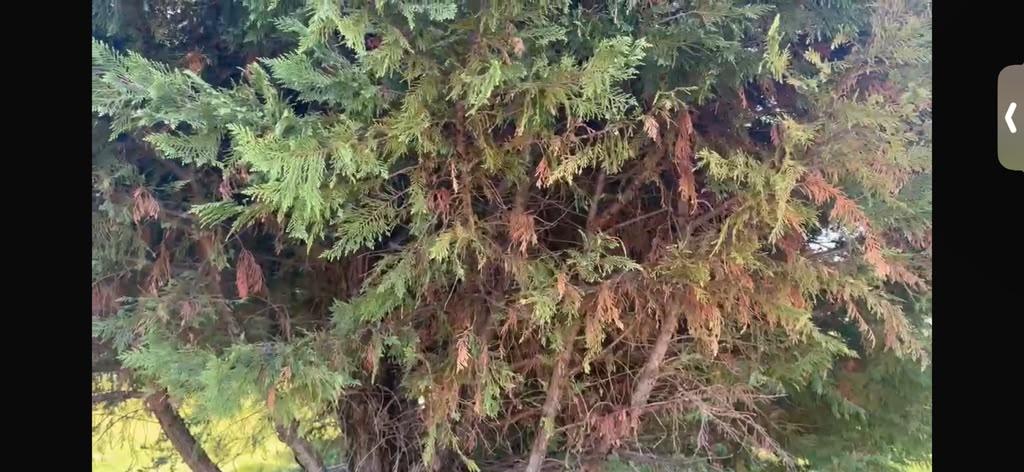
Today we’re here in Weatherford, Texas, inspecting several Leyland Cypress trees (× Cuprocyparis leylandii) that are struggling with two significant Plant Healthcare concerns: spider mite infestations and suspected Diplodia species-associated fungal disease.
During my inspection, I noticed several branches exhibiting progressive dieback, browning foliage, and necrotic tissue throughout portions of the canopy.
These symptoms are particularly concerning because Leyland Cypress trees are evergreen conifers. Unlike many deciduous trees, they do not readily regenerate foliage from older, bare wood.
Once significant portions of a branch become completely necrotic, that tissue generally will not return to healthy green growth.
That’s why early diagnosis is so important.
But here’s something I want homeowners throughout Weatherford and North Texas to understand:
When a Leyland Cypress begins turning brown, the problem isn’t always just an insect or a fungus.
Sometimes we’re dealing with a combination of environmental stress, insect pressure, fungal infection, improper watering, restricted airflow, and unfavorable soil conditions.
At Arborist USA, our objective is to identify those contributing factors and develop a Plant Healthcare program that addresses the underlying causes rather than simply treating the visible symptoms.
⸻
Why Leyland Cypress Trees Struggle in North Texas
Leyland Cypress trees are popular throughout Weatherford, Fort Worth, Southlake, Aledo, and surrounding communities.
Homeowners appreciate their rapid growth, evergreen foliage, and ability to provide privacy screening.
However, these trees can become challenging to maintain when exposed to the environmental extremes of North Texas.
During summer, temperatures frequently exceed 100°F.
During spring, we may experience prolonged periods of rainfall and saturated soil.
Then those conditions can quickly transition into drought and extreme heat.
That combination places tremendous physiological pressure on evergreen conifers.
Environmental Stress Weakens Natural Tree Defenses
Healthy trees manufacture carbohydrates through photosynthesis.
Those carbohydrates support:
- Root respiration
- New growth
- Defense responses
- Tissue maintenance
- Wound compartmentalization
- Recovery from environmental stress
When a tree experiences prolonged drought, excessive soil moisture, or root dysfunction, its ability to maintain normal physiological processes can decline.
That creates opportunities for certain pests and pathogens to become more damaging.
This is particularly important when dealing with spider mites and fungal branch diseases.
⸻
Spider Mites on Leyland Cypress Trees
One of the concerns we’re investigating on these Weatherford Leyland Cypress trees is spider mite activity.
Spider mites are extremely small arachnids that feed on plant tissues.
They are not insects.
They belong to the class Arachnida and are related to spiders and ticks.
Their feeding can cause substantial foliage damage when populations become excessive.
How Spider Mites Damage Cypress Foliage
Spider mites use specialized mouthparts to puncture plant cells and remove their contents.
As feeding continues, individual cells become damaged.
The foliage may begin displaying:
- Yellow or pale stippling
- Bronze discoloration
- Dull or grayish foliage
- Browning
- Premature foliage loss
- Progressive branch decline
Severe infestations can reduce the photosynthetically active foliage available to the tree.
That matters because evergreen conifers depend on their foliage to manufacture carbohydrates throughout favorable growing periods.
Spruce Spider Mites and Seasonal Activity
One mite worth investigating on Leyland Cypress is the spruce spider mite (Oligonychus ununguis).
Despite its name, this species can feed on several ornamental conifers.
An important scientific distinction is that spruce spider mites generally favor cooler conditions, with activity often increasing during spring and fall.
Extremely hot summer temperatures may suppress their populations.
Other mite species can behave differently, so we should identify the pest rather than assume every infestation follows the same seasonal pattern.
How We Diagnose Spider Mites
One practical field technique is the white-paper test.
Place a white sheet of paper beneath a symptomatic branch and gently tap the foliage.
If mites are present, small moving specks may become visible against the white background.
A hand lens can help confirm their presence.
We also inspect foliage for feeding injury, eggs, cast skins, and webbing where present.
The objective is confirming active pest pressure before applying insecticides or miticides.
⸻
How to Control Spider Mites on Leyland Cypress
Spider mite management should begin with an Integrated Pest Management program, commonly called IPM.
That means we’re combining inspection, monitoring, cultural practices, biological considerations, and chemical treatments when necessary.
Step One — Reduce Environmental Stress
The first step is improving the tree’s growing environment.
Spider mite injury can become particularly damaging when the tree is already physiologically stressed.
We want to evaluate:
- Soil moisture
- Irrigation coverage
- Root-zone compaction
- Drainage
- Mulching
- Canopy condition
Correcting these conditions helps support the tree’s natural ability to tolerate pest pressure.
Step Two — Protect Beneficial Predators
Not every mite living on a tree is harmful.
Predatory mites can feed on plant-damaging spider mites.
Certain lady beetles and other beneficial arthropods also contribute to natural pest suppression.
Broad-spectrum insecticides can sometimes eliminate beneficial predators and actually make spider mite problems worse.
That’s why product selection matters.
Step Three — Apply Targeted Miticides When Necessary
When monitoring confirms damaging spider mite populations, a properly selected miticide may be appropriate.
The product must be labeled for the specific use, host plant, and application method.
Timing is important because different miticides affect different life stages.
Some primarily target active mites.
Others have activity against eggs or immature stages.
Follow-up monitoring helps determine whether additional treatment is justified.
At Arborist USA, our goal is controlling the pest while minimizing unnecessary disruption to beneficial organisms.
⸻
Diplodia Species and Fungal Branch Dieback
The second concern on this Weatherford property is suspected Diplodia spp., potentially contributing to branch dieback.
Diplodia refers to a group of fungi, some of which are associated with cankers, shoot blight, and branch dieback in woody plants.
However, there is an important diagnostic distinction.
Leyland Cypress trees can also develop similar symptoms from Seiridium canker, Botryosphaeriaceae-associated cankers, and other fungal diseases.
Diplodia is particularly well documented as a cause of shoot blight on certain pine species, but we should not automatically identify it as the cause of Leyland Cypress decline based on browning branches alone.
For this case, Diplodia remains a suspected pathogen until laboratory identification confirms the organism.
That is why proper diagnosis matters.
What Happens When Fungal Pathogens Infect Branches?
Certain canker-producing fungi colonize susceptible bark and underlying woody tissues.
Depending on the pathogen, infection may result in localized tissue death, canker formation, and disruption of water movement through affected branches.
As the infection progresses, foliage beyond the damaged area may begin turning brown.
Eventually the affected branch can die.
The visible symptoms may include:
- Localized branch dieback
- Browning foliage
- Necrotic shoots
- Sunken or discolored bark
- Resin or sap exudation
- Canker development
- Progressive canopy thinning
These symptoms warrant further investigation because environmental injury can produce similar appearances.
⸻
Why Fungal Diseases Become More Damaging During Stress
Many fungal pathogens become particularly damaging when the host tree has already experienced environmental stress.
Drought is one contributing factor.
Excessive irrigation and poor drainage can create additional stress.
Root dysfunction can reduce water and mineral uptake.
As tree vigor declines, the ability to produce defensive compounds and compartmentalize injured tissues may also be affected.
This is why treating a fungal pathogen without correcting the underlying environmental conditions may produce disappointing results.
The tree’s environment and its disease-management program must work together.
⸻
Proper Pruning for Diseased Leyland Cypress Branches
One of our recommendations for these Weatherford trees is selective pruning to remove confirmed dead and diseased branches.
The objective is removing compromised tissue while preserving as much healthy foliage as reasonably possible.
Pruning should follow applicable ANSI A300 pruning practices.
Remove Dead and Diseased Tissue
Branches that are completely dead will not return to life.
Selective removal can improve appearance and, when appropriately performed, may reduce some sources of fungal inoculum.
However, removing dead branches does not necessarily eliminate an established pathogen from the tree.
The disease may already be present in additional tissues.
That is why pruning should be combined with continued monitoring and appropriate disease management.
Improve Airflow Without Over-Thinning
Air circulation can influence how long foliage remains wet after rainfall or irrigation.
Prolonged moisture can favor certain fungal diseases.
Selective pruning may improve airflow in overly dense portions of the canopy.
However, Leyland Cypress trees should not be aggressively thinned.
Removing excessive living foliage can reduce photosynthetic capacity and expose interior branches to additional environmental stress.
We want a balanced canopy.
Not a hollow tree.
Avoid Cutting Into Old Bare Wood
Leyland Cypress trees have limited ability to produce new shoots from older wood that no longer supports green foliage.
If we cut too far back into bare wood, that portion of the branch may remain permanently bare.
This is why pruning cuts need to be carefully selected.
We want to preserve healthy green growth wherever possible.
⸻
Sanitize Pruning Equipment
When working around suspected infectious canker diseases, sanitation is an important precaution.
Pruning tools should be cleaned and disinfected using an appropriate procedure, particularly when moving between visibly diseased and healthy plants.
Dead and diseased material should be removed from the property and handled appropriately.
We do not want potentially infected pruning debris accumulating around the base of the trees.
⸻
Proper Watering Is Essential for Leyland Cypress Recovery
Water management is one of the most important cultural practices in this treatment program.
Leyland Cypress trees need adequate soil moisture.
But they also require oxygen.
Too little water can create hydraulic stress.
Too much water can contribute to oxygen-deficient root conditions.
The objective is maintaining a healthy balance.
Understanding Root-Zone Hypoxia
Tree roots are living tissues.
They require oxygen for cellular respiration.
When soil becomes chronically saturated, water occupies pore spaces that would otherwise contain air.
Oxygen diffusion slows.
Root respiration becomes less efficient.
If saturation continues long enough, fine-root mortality can occur.
This can reduce the tree’s ability to absorb water even though the surrounding soil remains wet.
That’s why a tree can sometimes exhibit symptoms resembling drought while growing in excessively saturated soil.
Don’t Water Based Only on the Irrigation Timer
Irrigation should be adjusted according to actual soil conditions.
We want to evaluate moisture within the active root zone.
During prolonged rainfall, supplemental irrigation may need to be reduced or suspended.
During drought, irrigation may need to be increased.
The objective is maintaining adequate plant-available water without chronic saturation.
Water correctly. Don’t simply water more.
⸻
Mulching Around Leyland Cypress Trees
Mulching is another important part of our cultural management program.
A properly installed organic mulch layer can help moderate soil temperature, reduce evaporation, suppress turf competition, and gradually contribute organic matter.
For these Weatherford trees, I recommend approximately 2–3 inches of coarse organic mulch over an appropriately sized root-zone area.
Keep Mulch Away From the Root Flare
Mulch should never be piled directly against the trunk.
The natural root flare should remain visible.
Excessive mulch around the trunk can retain unnecessary moisture and conceal developing root or collar problems.
We want the mulch spread outward.
Not piled upward.
Why Mulch Helps During North Texas Summers
During extreme summer temperatures, exposed soil can become very hot.
Mulch moderates temperature fluctuations and helps reduce evaporation.
This can support more stable moisture conditions within the upper soil profile.
However, mulch does not replace proper irrigation.
It is one component of a broader Plant Healthcare program.
⸻
Soil Compaction and Root Health
Another condition we evaluate around Leyland Cypress trees is soil compaction.
Compacted soil contains fewer connected macropores.
Those larger pore spaces are important for:
- Oxygen movement
- Water infiltration
- Drainage
- Root elongation
- Soil biological activity
When compaction becomes severe, the root environment may become less favorable.
If our field inspection confirms significant compaction, pneumatic soil aeration may be considered.
The objective is improving soil structure without unnecessarily damaging existing roots.
⸻
Should We Apply Fungicides to Leyland Cypress Trees?
Fungicides may have a role in managing certain fungal diseases, but they must be selected according to the actual pathogen.
This is extremely important.
A fungicide that performs well against one fungal organism may provide little benefit against another.
Some fungal diseases affecting Leyland Cypress have limited chemical-control options.
For established cankers, fungicides generally cannot restore dead vascular tissue or reverse existing branch death.
Therefore, our first steps should include:
Identify the pathogen.
Evaluate the extent of infection.
Remove appropriate diseased tissue.
Correct environmental stress.
Determine whether a labeled fungicide is justified.
A preventive fungicide program may be appropriate for certain confirmed diseases and exposure conditions, but it should not be presented as a guaranteed cure for existing cankers.
⸻
Our Plant Healthcare Maintenance Program
For these Weatherford Leyland Cypress trees, I recommend developing a structured maintenance program.
The program should combine cultural management with targeted treatments based on monitoring results.
Phase One — Initial Diagnosis
Our first objective is establishing the extent of the problem.
We will evaluate spider mite populations, branch dieback, soil conditions, irrigation, and suspected fungal activity.
Where necessary, symptomatic tissue can be submitted for laboratory identification.
This helps us avoid applying products against the wrong organism.
Phase Two — Cultural Corrections
Next, we address the environmental conditions that may be contributing to decline.
This includes proper irrigation management, mulch installation, root-flare inspection, soil-compaction evaluation, and selective pruning.
These corrections are the foundation of the treatment program.
Phase Three — Integrated Pest Management
When active spider mite populations reach damaging levels, we can implement a targeted control program using appropriately labeled products.
We also want to preserve beneficial predators wherever possible.
Follow-up inspections will help determine treatment effectiveness.
Phase Four — Fungal Disease Management
If laboratory testing confirms a fungal pathogen, we can determine whether an appropriate fungicide program is available and justified.
Treatment decisions should consider the organism involved, disease severity, season, and product labeling.
The objective is protecting remaining healthy tissue where possible.
Not promising to restore branches that are already dead.
Phase Five — Continued Monitoring
Plant Healthcare should not end after the first treatment.
We want to monitor:
- Spider mite activity
- New branch dieback
- Canopy density
- Foliage color
- Soil moisture
- Root-flare condition
- Irrigation performance
- New fungal symptoms
Monitoring allows us to determine whether the trees are stabilizing or whether the disease complex continues progressing.
⸻
Can Leyland Cypress Trees Recover From Branch Dieback?
That depends on the severity of the damage.
If the tree retains substantial healthy foliage and the underlying stresses can be corrected, recovery may be possible.
However, completely dead branches generally will not regenerate foliage.
Our objective is preserving the remaining healthy canopy and preventing additional decline.
When significant portions of the canopy have already become necrotic, expectations must be realistic.
The earlier we identify and correct the contributing factors, the better the opportunity for preservation.
⸻
Why Annual Tree Inspections Matter
Leyland Cypress trees are often planted in rows to create privacy screens.
That means one declining tree can affect the appearance and function of the entire landscape.
Annual Plant Healthcare inspections can help identify problems before they become severe.
Spider mites may begin damaging foliage long before the homeowner notices widespread browning.
Fungal cankers may develop on individual branches before extensive canopy dieback occurs.
Irrigation problems may remain hidden underground until the tree begins losing foliage.
Regular monitoring gives us the opportunity to intervene earlier.
⸻
Final Thoughts — Protecting Leyland Cypress Trees in Weatherford, Texas
These Leyland Cypress trees in Weatherford demonstrate why Plant Healthcare requires more than simply spraying an insecticide or fungicide.
We’re dealing with confirmed or suspected pest pressure, branch dieback, and environmental conditions that may be contributing to the decline.
Spider mites damage foliage by feeding on plant cells.
Fungal pathogens can contribute to cankers and branch mortality.
Improper irrigation can compromise root function.
Soil compaction can restrict oxygen movement.
And excessive pruning can remove valuable photosynthetic foliage.
These factors can compound one another.
That’s why our treatment strategy begins with understanding the entire biological system.
Identify the pest.
Confirm the pathogen.
Correct irrigation.
Improve the soil.
Prune appropriately.
Apply targeted treatments when justified.
Continue monitoring.
At Arborist USA, we believe successful Plant Healthcare begins with diagnosing the underlying cause rather than simply treating the visible symptoms.
Sometimes a tree needs insect control.
Sometimes it needs fungal disease management.
Sometimes it needs better irrigation or soil conditions.
And sometimes it needs all of those things working together.
Our objective is to help these Leyland Cypress trees maintain healthy foliage, functioning roots, and a sustainable canopy for years to come.
Healthy soil supports healthy roots. Healthy roots support healthy trees.
For general tree-care best practices, homeowners can also reference guidance from the Texas A&M Forest Service, https://tfsweb.tamu.edu/trees/, a trusted authority on Texas tree health.
Schedule a professional inspection. Early detection and scientific intervention are the difference between preservation and loss. If you’d like to speak to an arborist, please call us at 817-880-6130 or visit https://www.arboristusa.com/
Henry G. Friar
ISA Certified Arborist® TX-270627A
Arborist USA — Plant Healthcare Professional
Today we’re in Weatherford, Texas, inspecting Leyland Cypress trees (× Cuprocyparis leylandii) experiencing significant pest pressure, suspected fungal disease, and progressive branch dieback.