 4.9 (370 Reviews)

Henry G. Friar
ISA Certified Arborist® TX-270627A
TDA License No. 1008483
TCIA Member #268065
Arborist USA | Plant Healthcare Professional
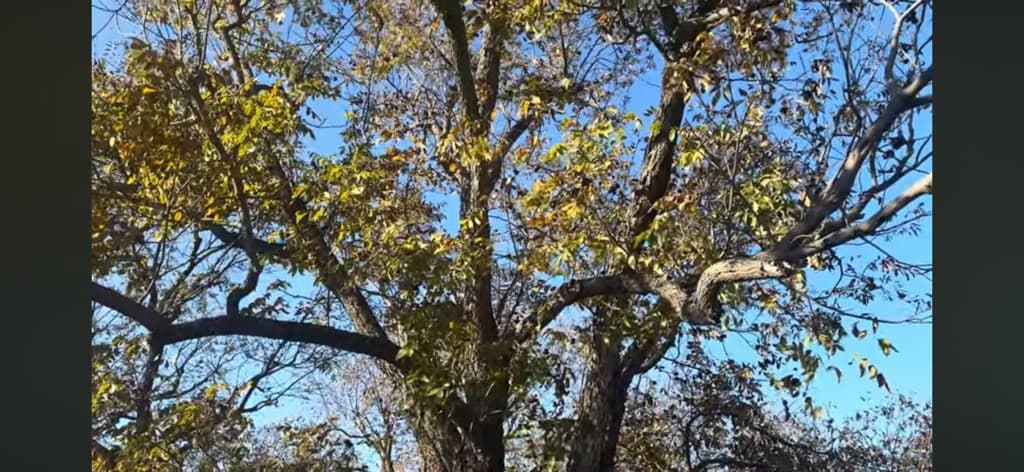
Hello Community, we’re located today in Pecan Plantation in Granbury, Texas. Our main focus is the pecan trees located in the front and backyard, approximately 60 trees.
We have this client on a biannual Plant Healthcare treatment plan. In this inspection, we’re specifically looking at four different types of pest pressures that can become problematic for these pecan trees.
Four Different Types of Beetles That Attack Pecan Trees
Twig Girdler Beetle
The twig girdler normally attacks smaller twigs and branches throughout the crown and canopy. The female beetle girdles the branch and deposits her eggs in the portion of the branch that will eventually die.
These branches can break off and fall to the ground. Removing affected fallen branches can help reduce future populations of this particular beetle.
Flatheaded Borer Beetle
The flatheaded borer beetle can leave D-shaped exit holes on the stems and main trunk, sometimes down toward the root flare.
This can cause bark to become dislodged from the main trunk because of the serpentine wood galleries that tunnel through the tissues beneath the bark, damaging the cambium and adjacent tissues.
Roundheaded Borer Beetle
The roundheaded borer can leave oval or rounded exit holes in the bark, depending on the species.
These insects can damage the cambial tissues and tunnel deeper into the wood. Over time, extensive damage can become problematic, weakening the affected areas and potentially creating opportunities for wood decay.
The loss of protective bark can also expose underlying woody tissues to further environmental damage.
Ambrosia Beetle
The ambrosia beetle leaves small, circular holes in the bark. Unlike some of the other borers, these beetles tunnel primarily into the sapwood, where they cultivate fungi.
Many of these pest pressures are opportunistic and are more commonly associated with trees that are already experiencing some type of environmental or physiological stress.
This doesn’t mean they cannot kill a tree. A severe infestation can further compromise the tree’s ability to respond to environmental stressors such as drought and pathological diseases.
That’s why, when we’re inspecting these pecan trees, we’re not just looking for insects. We’re also looking at the overall vigor and health of the tree and trying to understand what’s making it vulnerable to these pest pressures.
Another Concern — Pecan Scab Fungus
Another contributing factor that I’m noticing on these trees is what appears to be pecan scab fungus on the foliage.
More than likely, although I’m not certain without further diagnostic testing, the prolonged rainfall we experienced from Mother Nature during the spring and early summer of 2026 may have contributed to this problem.
We had lots of torrential rain, creating extended periods of moisture on the foliage. These are favorable conditions for the development of pecan scab.
From what I’m seeing during this inspection, the visible symptoms appear to be limited to the foliage. I’m not seeing obvious signs of the disease on the pecans themselves.
The trees have produced a robust crop.
We should address the potential for scab fungus early next spring. If the diagnosis and disease history warrant a fungicide application, our objective will be mitigation and protection of new growth, not reversing damage to previously infected foliage.
Oversaturation and Hypoxia in Pecan Tree Root Systems
The oversaturation we experienced earlier this year also poses another potential stress factor for these trees.
When soil becomes excessively saturated for extended periods, the amount of oxygen available to the root system can decrease, creating a condition known as hypoxia.
This can compromise root function and potentially increase the tree’s susceptibility to certain root diseases.
Changes in soil pH are another factor we can evaluate through soil testing, but we cannot assume that excessive rainfall has raised the soil pH without testing it.
Newly Planted Grass Around Mature Pecan Trees
I also noticed on this property that newly planted grass is being allowed to grow directly up to the root flares of these pecan trees.
With the introduction of new grass comes another potential stress factor for the trees, particularly during the establishment period when the irrigation system may be running more frequently.
The irrigation requirements of newly planted turfgrass are not necessarily the same as those of an established pecan tree.
I also noticed algae growing on the trunks of some of these trees. Even though the algae itself is generally benign, it gives me an indication that these areas are experiencing prolonged or repeated moisture exposure.
I’ve recommended to the client that we redirect the irrigation heads toward the grass and avoid having them directly hit the trunks of the trees.
This is a simple mitigation process that can help minimize unnecessary moisture on the bark.
Removing Grass From Around the Root Flare
I’ve also recommended to the client that we remove the grass from around these pecan trees, extending outward at least four feet from the trunk where feasible.
I would like to see approximately two inches of long-fiber wood mulch placed in these areas, keeping the mulch away from the trunk and the root flare exposed.
This will help reduce competition from the grass, conserve soil moisture and protect the area around the base of the trees from unnecessary mechanical damage.
Our Fall Plant Healthcare Treatment
Our focus this fall, going into the winter of 2026, will be supporting the root systems of these pecan trees without encouraging excessive canopy growth.
We’ll be utilizing a low-nitrogen 2-2-3 root-support fertilizer, along with a seaweed and kelp-based amendment, with the intention of supporting root function and favorable biological activity within the soil.
The application will depend on soil conditions, nutrient requirements and the appropriate product directions.
Returning in the Spring of 2027
We’ll be returning next spring to reevaluate these pecan trees and determine whether a higher-nitrogen application is appropriate based on their health and nutritional requirements.
Because of the suspected pecan scab, we should start monitoring early in the spring, around budbreak, rather than waiting until late spring to address the disease.
We’ll also continue with our Integrated Pest Management program, monitoring for the four different beetle groups and other seasonal pest pressures.
Monitoring is going to be our best friend when it comes to maintaining the health of these 60 pecan trees.
If you have pecan trees on your property here in Pecan Plantation or throughout the Granbury area, take the time to have them professionally inspected before these pest pressures and environmental stressors become a much bigger problem.
ARBORIST USA — WE SAVE SICK TREES!
Henry G. Friar
ISA Certified Arborist® TX-270627A
TDA License No. 1008483
TCIA Member #268065
Plant Healthcare Professional
817-880-6130
https://www.arboristusa.com/
⸻
Supporting Scientific Research — Texas A&M AgriLife
Texas A&M AgriLife identifies stressed and newly established trees as being particularly susceptible to flatheaded borer infestations.
For twig girdlers, collecting and destroying infested fallen branches can help interrupt the insect’s reproductive cycle.
Pecan scab, caused by the fungal pathogen Venturia effusa, is favored by extended wet conditions. When fungicide protection is warranted, management may need to begin around budbreak and continue according to disease pressure, weather conditions and product-label requirements.
Educational Resources
Texas A&M AgriLife — Managing Flatheaded Borers in Fruit and Nut Trees
Texas A&M AgriLife — Pecan Pests in the Home Orchard
Texas A&M AgriLife — Simplified Pecan Spray Guide
Our main focus is the pecan trees located in the front and backyard, approximately 60 trees.
We have this client on a biannual Plant Healthcare treatment plan. In this inspection, we’re specifically looking at four different types of pest pressures.
Twig Girdler Beetle
The twig girdler normally attacks smaller twigs and branches throughout the crown and canopy. The female beetle girdles the branch, which eventually dies and can break off.