 4.9 (370 Reviews)

By Henry G. Friar | ISA Certified Arborist® TX-270627A | TDA License No. 1008483 | TCIA Member #268065 | Arborist USA
Are grapevines, briars, or invasive climbing vines taking over your Live Oaks, Red Oaks, and mature hardwood trees in Granbury, Texas? Heavy vine growth can reduce sunlight reaching tree foliage, compete for water and nutrients, increase canopy loading, and create serious challenges when woody vines become wrapped around branches and trunks. At Arborist USA, Henry G. Friar, ISA Certified Arborist® TX-270627A, TDA License No. 1008483, and TCIA Member #268065, explains why early vine removal is essential for protecting mature trees throughout Granbury and North Texas.
Removing Grapevines and Briars From Mature Trees in Granbury, Texas
Hello Community, my name is Henry G. Friar, ISA Certified Arborist with Arborist USA, here in Granbury, Texas.
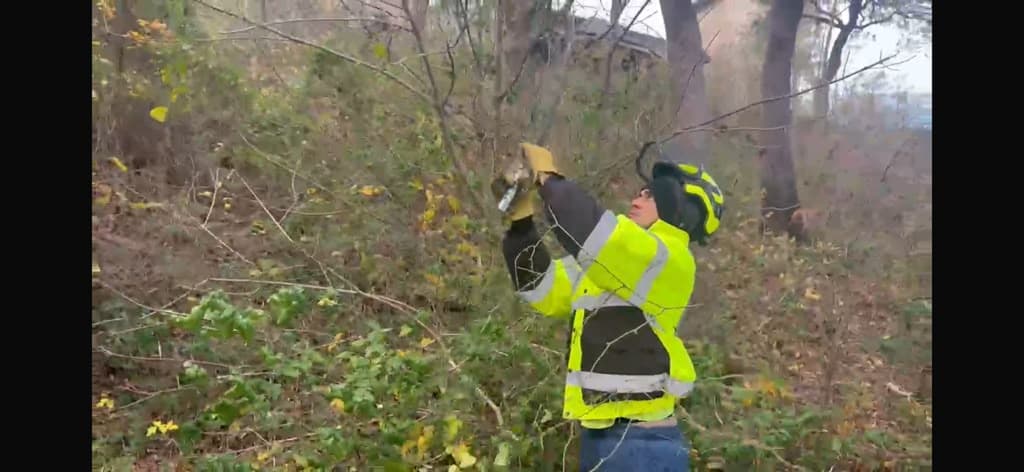
Today, we’re removing established grapevines, briars, and other climbing vegetation from mature Live Oaks, Red Oaks, and hardwood trees.
This is something I encounter regularly throughout North Texas, particularly on larger properties, wooded landscapes, ranches, and areas where vegetation has been allowed to grow without management.
At first, a small vine climbing a tree may seem harmless.
But over time, certain climbing vines can become extremely aggressive.
They may extend from the ground into the lower branches, climb into the upper canopy, and eventually cover substantial portions of the tree’s foliage.
Once these vines become established, removing them without damaging the tree becomes much more difficult.
The best time to control a climbing vine is while it’s still small and accessible near the ground.
That simple principle can prevent years of expensive maintenance and unnecessary injury to valuable trees.
How Grapevines and Briars Affect Mature Oak Trees
Climbing vines and briars can affect trees in several different ways.
Some of the most important concerns involve competition for sunlight, physical loading, and interference with normal tree maintenance.
Understanding the Difference Between Grapevines and Briars
Wild grapevines belong to the genus Vitis.
They are woody climbing plants that use tendrils to attach themselves to surrounding vegetation.
As grapevines mature, their stems become thicker, heavier, and more difficult to remove.
Briars, including plants commonly referred to as greenbriers in the genus Smilax, often have thorny stems that climb or scramble through surrounding vegetation.
Some greenbriers also develop extensive underground rhizomes or other storage structures that allow them to regenerate after cutting.
Not every vine growing on a tree is invasive, and native grapevines and greenbriers provide ecological benefits, including wildlife food and habitat.
However, even native vines may require management when they become excessively dense or interfere with valuable landscape trees.
The goal is not to eliminate every vine from the environment.
The goal is to manage excessive growth where it threatens the health, accessibility, or structural condition of mature trees.
How Excessive Vine Growth Can Reduce Photosynthesis
One of the primary concerns with heavy vine growth is its ability to compete for sunlight.
Why Sunlight Is Essential for Healthy Tree Foliage
Trees depend on photosynthesis to produce carbohydrates.
During photosynthesis, chlorophyll-containing tissues absorb light energy and use it to support the conversion of carbon dioxide and water into sugars.
Those sugars provide energy and building materials for growth, root maintenance, defense responses, and other biological functions.
When dense vines cover portions of a tree’s canopy, they can intercept sunlight that would otherwise reach the tree’s leaves.
This can reduce light availability for shaded foliage.
How Vine Coverage Can Affect Crown Density
Leaves growing in prolonged shade may receive insufficient light to maintain the same photosynthetic output as leaves receiving adequate sunlight.
Over time, heavily shaded branches may experience reduced vigor, diminished growth, or foliage loss.
If vine growth becomes extensive enough, the tree may lose portions of its functional photosynthetic canopy.
This can be particularly concerning when the tree is already experiencing drought, soil compaction, root damage, or disease pressure.
However, not every vine causes significant photosynthetic suppression.
The effect depends on the vine species, density, location within the crown, and the amount of foliage being covered.
Our concern is excessive vine growth that physically overtakes and shades important portions of the tree’s canopy.
Why Grapevines Become So Difficult to Remove
One of the biggest challenges with established grapevines is their woody growth habit.
How Mature Grapevines Wrap Around Branches
Grapevines use tendrils to attach themselves to branches and other supporting structures.
As the vine grows, its stems can become intertwined with smaller branches and surrounding vegetation.
Over time, the vine may develop substantial woody stems extending from the ground into the upper canopy.
These stems can become mechanically entangled with branches.
In some cases, the tree’s own growth gradually surrounds or presses against portions of the vine.
This creates a situation where the vine is no longer easy to separate from the tree.
Why Pulling Grapevines Can Damage Tree Bark
This is one of the most important lessons I want homeowners to understand.
Never assume that a large grapevine can simply be pulled out of a mature tree without consequences.
When a vine has become tightly wrapped around branches or lodged against the trunk, pulling it can create substantial mechanical force.
That force may tear bark, break smaller branches, or damage living tissues beneath the bark.
The vascular cambium is a thin layer of living cells responsible for producing new xylem and phloem.
When bark is forcibly removed, cambial tissues may be injured.
Severe injuries can interfere with normal vascular function and create exposed wood that the tree must compartmentalize.
The resulting wounds may also provide opportunities for certain pathogens or insects.
For oak trees in Texas, avoiding unnecessary bark injuries is particularly important because fresh wounds can create opportunities for oak wilt transmission under suitable conditions.
Why Early Vine Removal Is the Best Strategy
The most effective approach is often to interrupt the vine’s growth before it becomes heavily established.
When a vine is still small, it can usually be managed with less disturbance to the tree.
Once the vine becomes large and woody, removal may require specialized equipment and careful sectional work.
Early management is generally safer, less labor-intensive, and less expensive.
Why Cutting Vines at Ground Level Is Often Better Than Pulling Them
At Arborist USA, we emphasize minimizing unnecessary damage to the tree.
Separating the Vine From Its Root System
For established climbing vines, one commonly used technique is to sever the vine near ground level.
This interrupts the connection between the vine’s roots and its upper growth.
Depending on the species, cutting a second section higher on the stem can create a visible gap that helps confirm the vine has been disconnected.
However, cutting alone may not kill the root system.
Some species can resprout vigorously from roots, rhizomes, or remaining stems.
Therefore, follow-up monitoring is essential.
Why We Avoid Pulling Large Vines From the Canopy
After severing a large vine, the upper portions may remain entangled in the tree.
Attempting to pull those vines down immediately can break branches or strip bark.
In many cases, allowing the vine to die and dry before considering further removal reduces the need to force living stems away from the tree.
However, dead vines can remain mechanically entangled and may eventually fall.
The decision to leave them temporarily or remove them in sections depends on their size, location, and potential to create hazards.
Large vines suspended above people, buildings, vehicles, or other targets may require controlled removal by qualified tree-care professionals.
The goal is to remove or suppress the vine without creating a larger problem for the tree.
Can Grapevines Actually Choke a Tree?
Homeowners often describe vines as choking their trees.
That expression is understandable, but scientifically, several different processes may be involved.
Shading and Competition
Dense climbing vines can intercept sunlight and compete with the tree for available resources.
Their foliage may cover important portions of the crown, while their roots compete for water and mineral nutrients.
Mechanical Pressure and Girdling
Certain vines can wrap tightly around stems or branches.
As the tree and vine increase in diameter, localized pressure may develop.
Under some conditions, constricting stems can damage bark or interfere with normal growth.
However, not every grapevine causes true girdling.
Grapevines commonly climb using tendrils and physical support rather than consistently strangling the trunk.
Additional Weight and Wind Resistance
Heavy vine growth can add mass and increase the surface area exposed to wind.
This may affect loading on branches, especially when vines extend between multiple trees or become entangled in weakened limbs.
The actual effect depends on vine density, branch structure, and environmental conditions.
Large vine networks can also complicate pruning and tree-risk inspections by concealing defects or restricting access.
Briars and Greenbriers — Why They’re So Difficult to Control
Briars can present a different management challenge.
Many greenbriers develop extensive underground storage structures.
These structures allow the plants to survive unfavorable conditions and regenerate after their aboveground stems are removed.
Why Cutting Briars Once May Not Be Enough
When a greenbrier is cut near the ground, the remaining underground system may produce new shoots.
This means a single cutting may provide temporary clearance without permanently controlling the plant.
Repeated monitoring and follow-up management may be necessary.
Why Briars Create Problems Around Mature Trees
Dense briar growth can restrict access to the root flare and lower trunk.
This makes it harder to inspect for basal decay, mechanical injuries, fungal fruiting bodies, and other potential concerns.
Thorny stems also create hazards for workers performing maintenance.
Removing excessive briar growth can improve visibility and access for future tree inspections.
How Vine Growth Can Affect Tree Structure and Storm Resistance
Mature Live Oaks and Red Oaks in Granbury may already experience significant environmental loading during thunderstorms.
Dense climbing vegetation can add complexity to how branches respond to wind.
Additional Canopy Weight
Large woody vines can add weight to branches.
If the vine extends across multiple limbs, it may create additional connections between branches that would otherwise move more independently.
These connections can influence branch movement during wind events.
Concealed Structural Defects
Heavy vine growth can obscure cracks, cavities, dead branches, and weak attachments.
This makes professional inspection more difficult.
When evaluating a mature tree, visibility of major scaffold branches and structural unions is important.
Removing excessive vine growth may improve our ability to monitor these areas.
Why Professional Removal Matters
Large vines can be under tension or mechanically entangled with branches.
Cutting or pulling them without understanding the forces involved can create unexpected movement.
For this reason, extensive vine removal from mature trees should be performed using appropriate equipment and safe work practices.
Protecting Live Oaks From Unnecessary Wounds and Oak Wilt
Here in Granbury, Texas, oak wilt prevention is an important consideration.
Oak wilt is caused by the fungus Bretziella fagacearum.
The disease can spread through interconnected root systems and, under suitable conditions, through sap beetles carrying fungal spores to fresh wounds.
Why Bark Injuries Matter
When large vines are forcibly removed, they may tear bark or expose living tissues.
These injuries can create potential infection sites.
This is why we emphasize careful vine removal rather than aggressively pulling woody stems from the tree.
Oak Wilt Prevention During Vine Removal
Our management approach includes minimizing unnecessary wounds, sanitizing pruning equipment appropriately, and promptly painting fresh oak wounds in accordance with Texas oak wilt prevention guidance.
Vine-removal activities should also be scheduled with consideration for seasonal oak wilt risk.
Protecting the bark and living tissues is an important part of preserving mature oak trees.
Our Professional Vine Removal Process at Arborist USA
Every property is different.
The appropriate method depends on the vine species, size, location, and extent of canopy involvement.
Step 1 — Identify the Climbing Vegetation
We begin by identifying whether the vegetation consists of grapevines, greenbriers, or other climbing plants.
Different species have different growth habits and regeneration mechanisms.
Step 2 — Evaluate the Tree and Surrounding Area
We inspect the tree’s condition and determine whether vines are attached to important branches, structural unions, or other sensitive areas.
We also evaluate potential hazards associated with removing suspended vegetation.
Step 3 — Sever Accessible Vines Carefully
Where appropriate, vines are cut near ground level without damaging the tree’s bark or root flare.
Large vines may require controlled sectional removal.
Step 4 — Protect the Canopy and Bark
We avoid unnecessary pulling that could tear bark or break branches.
Dead vines may be left temporarily when removal would create greater damage, provided their location does not create an unacceptable hazard.
Step 5 — Monitor Regrowth
Follow-up inspections are important because grapevines, greenbriers, and other climbing plants may regenerate from surviving roots or underground structures.
Repeated cutting or other appropriately selected control methods may be necessary.
Where herbicides are considered, product selection and application must comply with the label, site restrictions, and applicable Texas regulations. Particular care is necessary around desirable tree roots and bark.
Why Hiring an ISA Certified Arborist Matters in Granbury, Texas
Removing vines from mature trees is not always a simple landscaping task.
A large grapevine may be connected to multiple branches, wrapped around structural unions, or growing high into the canopy.
Improper removal can cause unnecessary bark injuries and branch damage.
An ISA Certified Arborist can evaluate the tree’s condition, determine appropriate removal methods, and identify potential structural concerns that may be hidden beneath dense vegetation.
At Arborist USA, we focus on preserving valuable mature trees while addressing the vegetation that may interfere with their health and maintenance.
Our philosophy is simple:
Identify the problem. Protect the tree. Remove vegetation carefully. Monitor regrowth.
Final Thoughts — Remove Vines Early Before They Damage Mature Trees
If there’s one message I want homeowners in Granbury, Texas, to remember, it’s this:
Don’t wait until a grapevine becomes as large as a tree branch before deciding to remove it.
Early management can prevent years of difficult maintenance.
Dense climbing vines may shade important foliage, compete for resources, add canopy weight, conceal structural defects, and create challenges during pruning.
Large grapevines can become so entangled with branches that pulling them down may strip bark or break living tissues.
In many situations, carefully severing the vine near ground level and managing regrowth is a better approach than attempting to pull the entire vine from the canopy.
The objective is to preserve the tree while reducing excessive climbing vegetation.
Protect Your Live Oaks, Red Oaks, and Mature Hardwoods
Mature trees represent decades of growth and substantial landscape value.
Protecting their bark, foliage, root systems, and structural integrity should always be the priority.
Contact Arborist USA for Vine Removal in Granbury, Texas
If grapevines, briars, or other climbing vegetation are overtaking your mature trees, contact Arborist USA for professional evaluation and management.
We proudly serve Granbury, Pecan Plantation, Glen Rose, Weatherford, Stephenville, Fort Worth, and surrounding North Texas communities.
ARBORIST USA — WE SAVE SICK TREES!
Henry G. Friar
ISA Certified Arborist® TX-270627A
TDA License No. 1008483
TCIA Member #268065
Plant Healthcare Professional
Arborist USA
Office: 817-880-6130
Website: https://www.arboristusa.com/
Today, we’re removing large, established grapevines, briars, and climbing vegetation from mature Live Oaks, Red Oaks, and other valuable hardwood trees.
Many homeowners don’t realize how damaging excessive vine growth can become until these woody vines have completely overtaken portions of the tree’s canopy.
In this video, I explain the science behind vine competition, reduced photosynthesis, bark injuries, branch loading, and why early intervention is so important.