 4.9 (349 Reviews)

How an ISA Certified Arborist Evaluates Structural Defects, Internal Wood Decay, and Tree Preservation Options in North Texas
Three Serious Conditions Affecting One Southern Live Oak in Flower Mound, Texas
Hello Community, my name is Henry G Friar, ISA Certified Arborist® TX-270627A and TDA Licensed Applicator #1008483, with Arborist USA, here in Flower Mound, Texas.
Today, I want to share an interesting tree evaluation involving a mature Southern Live Oak (Quercus virginiana) that I was recently called out to inspect.
This particular Live Oak presented three separate conditions that could affect its structural integrity and long-term survival.
The first condition was included bark between two major codominant stems.
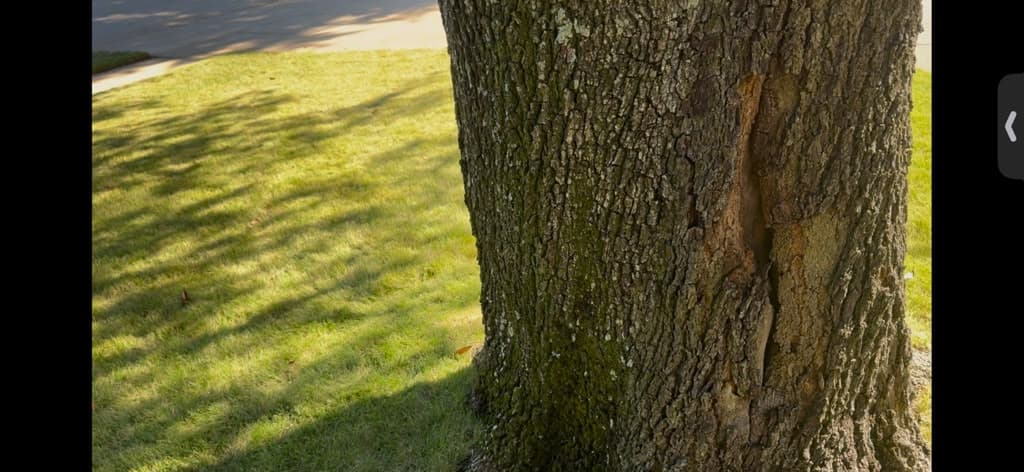
The second condition was extensive freeze damage associated with the February 2021 Texas winter storm, including a large open wound and visible wood deterioration consistent with white rot.
The third condition was a suspected lightning strike extending vertically along one of the major stems toward the root flare.
What made this inspection particularly interesting was that the tree still maintained a dense, healthy-looking canopy.
From a distance, someone might assume this was a perfectly healthy Live Oak.
However, when we examined the trunk, major attachments, and damaged tissues, a much more complicated picture emerged.
This is why professional tree evaluations are so important.
A tree can look healthy on the outside while having significant structural concerns on the inside.
Let’s examine the science behind these three conditions and discuss what homeowners can do to manage them.
⸻
Condition #1: Included Bark Between Two Major Codominant Stems
One of the first things I noticed during the inspection was the attachment between two large stems.
These stems were approximately equal in structural importance, creating what arborists call a codominant stem arrangement.
What Are Codominant Stems?
Most trees develop a dominant central trunk with smaller branches extending outward.
However, some trees develop two major stems originating from approximately the same attachment area.
These are called codominant stems.
Codominant stems are not automatically dangerous.
The concern develops when the attachment between those stems has poor structural characteristics.
One of the most important defects we look for is included bark.
What Is Included Bark?
Included bark occurs when bark becomes trapped between two stems as they grow together.
Normally, a strong branch attachment develops overlapping wood tissues that help distribute mechanical forces.
When bark becomes embedded between two stems, it can interfere with the development of a strong wood-to-wood connection.
Think about two pieces of wood pressed together with a layer of bark trapped between them.
That bark does not provide the same structural connection as continuous wood fibers.
As the stems increase in diameter, the attachment may become increasingly vulnerable to splitting.
Why Is Included Bark a Structural Concern?
As a mature Live Oak grows, its major stems become heavier.
During windstorms, ice accumulation, or other severe weather events, those stems experience substantial mechanical loading.
If the attachment contains included bark, the union may have reduced resistance to separation.
In some cases, cracks can develop and extend downward through the attachment.
Eventually, one of the stems may fail.
The actual risk depends on several factors, including the size of the stems, attachment geometry, existing cracks, internal wood condition, and nearby targets.
How Can Arborists Reduce the Risk of Included Bark?
For certain trees, supplemental structural support may be appropriate.
During this evaluation, I considered a combination of threaded steel bracing rods and a heavy-duty steel support cable.
Bracing rods are installed through selected structural attachment areas to help resist separation forces.
Support cables are installed between suitable upper stems to help limit excessive movement and reduce certain loads on the attachment.
For this particular tree, the proposed design involved two 5/8-inch threaded bracing rods and a seven-strand steel cable in the upper crown.
The final placement and suitability of this hardware must be determined by the tree’s actual architecture and the condition of the remaining sound wood.
Does Cabling and Bracing Make a Tree Completely Safe?
No.
This is something I explain carefully to homeowners.
Supplemental support systems can reduce certain mechanical stresses, but they cannot restore the natural wood connection that failed to develop.
They also cannot reverse internal decay.
A tree with installed hardware can still experience branch failure, stem failure, root failure, or damage during extreme weather.
Cabling and bracing are risk-reduction tools, not guarantees against tree failure.
These systems also require periodic professional inspection as the tree grows.
⸻
Condition #2: February 2021 Freeze Damage and White Rot in a Southern Live Oak
The second major concern involved a large open wound associated with the historic February 2021 Texas winter storm.
Many North Texas homeowners remember the extreme freezing temperatures that affected landscapes throughout the Dallas–Fort Worth Metroplex.
Southern Live Oaks can experience significant injury during unusually severe freezing conditions.
How Does Extreme Cold Damage a Live Oak?
Trees contain living tissues beneath their bark.
One of the most important is the vascular cambium, a thin layer of living cells responsible for producing new xylem and phloem.
Xylem transports water and dissolved minerals, while phloem transports sugars and other organic compounds.
Extreme freezing temperatures can damage living cells and disrupt normal physiological activity.
Depending on the severity of the injury, freeze damage may result in bark separation, cracks, cambial death, or large areas of exposed wood.
In this Flower Mound Live Oak, a substantial open wound had developed.
How Do Trees Respond to Freeze Damage?
One encouraging observation was the presence of new woundwood forming around portions of the damaged area.
This is part of the tree’s natural response to injury.
However, trees do not heal damaged wood the same way human skin heals a wound.
Instead, trees compartmentalize damage.
This process is explained through a scientific model known as CODIT.
What Is CODIT?
CODIT stands for Compartmentalization of Decay in Trees.
When a tree experiences an injury, it can develop chemical and anatomical boundaries that restrict the spread of decay organisms.
These protective responses may slow the movement of decay through the wood.
The tree can also produce new wood around the damaged area.
However, the original damaged wood does not regenerate into healthy wood.
This distinction is extremely important.
A tree may produce substantial woundwood around an injury while deterioration continues within the exposed internal wood.
What Is White Rot, and Why Is It Dangerous?
During the inspection, I observed wood deterioration consistent with white rot inside the large open wound.
White rot is caused by certain wood-decay fungi that break down lignin and, depending on the organism, other structural components of wood.
Lignin contributes to the rigidity and mechanical properties of wood.
As fungi degrade these components, the affected wood may gradually lose strength.
This becomes especially concerning when decay affects the trunk, major branch attachments, or structural roots.
Could Ganoderma Be Responsible?
Certain Ganoderma species are associated with white rot in trees.
Some produce visible fungal fruiting bodies called conks.
However, white rot does not automatically mean that Ganoderma is present.
Different fungi can produce similar forms of wood deterioration.
Laboratory identification may be necessary to determine the organism responsible.
Can a Live Oak Have White Rot and Still Look Healthy?
Absolutely.
This is one of the most important lessons from this evaluation.
The Live Oak maintained a dense canopy despite the substantial wound.
That tells us significant portions of the tree remain physiologically functional.
However, it does not prove that the internal wood is structurally sound.
A tree can continue transporting water and supporting foliage while portions of its structural wood deteriorate.
Why Trunk Taper Matters
Another encouraging observation was the substantial trunk taper.
Trunk taper describes how a tree’s stem generally becomes wider toward the base.
A broad lower trunk can provide favorable mechanical characteristics.
However, even a large, well-tapered trunk can be structurally compromised if enough critical wood has deteriorated.
For this reason, I recommend evaluating the location and extent of internal decay before determining whether structural support hardware is appropriate.
⸻
Can Plant Healthcare Treatments Cure White Rot?
This is an important question homeowners frequently ask.
There is currently no established fungicide treatment that reliably eliminates advanced internal white rot or restores wood that has already decayed.
Once wood has lost structural strength through decay, fertilizers and soil treatments cannot rebuild that original material.
However, this does not mean Plant Healthcare has no role in managing a stressed tree.
Supporting the Remaining Healthy Tissues
At Arborist USA, our Plant Healthcare approach focuses on maintaining favorable growing conditions and addressing identifiable physiological limitations.
This may include appropriate micronutrients, soil conditioning, irrigation management, and root-zone evaluation.
Why Micronutrients Matter
Micronutrients participate in essential biological processes, including enzyme activity, chlorophyll formation, and normal metabolism.
When deficiencies are present, correcting them can support healthy tree function.
However, applying additional nutrients without an identified need does not necessarily improve tree health.
Micronutrients also cannot restore decayed structural wood.
Seaweed Carbon, Kelp, and Humic Acids
Selected seaweed- and kelp-based amendments and humic materials may be incorporated into a soil-management program where appropriate.
Their potential benefits depend on the product formulation, application rate, soil conditions, and the tree’s actual needs.
They should not be viewed as replacements for proper drainage, oxygen availability, or healthy soil structure.
Why Soil Oxygen Is Essential
Tree roots need oxygen for cellular respiration.
When soil becomes severely compacted or remains saturated for extended periods, oxygen availability can decline.
This can interfere with root function.
Maintaining appropriate moisture and aeration is therefore an important part of supporting a stressed tree.
What About Antifungal Treatments?
Fungicides may be appropriate for certain diagnosed fungal diseases when a product is specifically labeled for that disease and application method.
However, applying fungicide to the soil or trunk should not be represented as a cure for established internal wood decay.
Our objective is to support the tree’s remaining healthy tissues while recognizing the limitations of treatment.
⸻
Condition #3: Suspected Lightning Strike Extending Toward the Root Flare
The third condition involved a long vertical injury extending down one of the major stems toward the root flare.
The pattern raised concern for a previous lightning strike.
What Happens When Lightning Strikes a Tree?
Lightning involves a rapid discharge of electrical energy.
When lightning interacts with a tree, intense heating may occur within moisture-containing tissues.
This can produce sudden vaporization of water and substantial mechanical damage.
Depending on the pathway and intensity of the electrical discharge, lightning may cause bark separation, longitudinal cracks, cambial injury, or damage to roots.
Some trees experience extensive injury.
Others survive and continue growing.
Why Do Some Trees Survive Lightning Strikes?
A tree may survive if enough living vascular tissue and functional roots remain intact.
The extent of injury depends on the path of the electrical discharge and the tissues affected.
In some cases, damage is immediately obvious.
In others, additional symptoms may become apparent over subsequent growing seasons.
Can Lightning Damage the Root System?
Yes.
Lightning-related energy can sometimes affect roots and surrounding soil.
However, visible trunk injury does not automatically establish that the entire root system has been damaged.
A careful evaluation is needed to determine whether root injury is present.
Can Lightning Injury Contribute to Future Wood Decay?
Potentially.
Severe injury may expose internal wood or damage living tissues, creating opportunities for wood-decay organisms to colonize vulnerable areas.
However, we cannot determine from appearance alone whether the white rot in this particular tree originated from the freeze injury, suspected lightning injury, or another earlier wound.
[What Can Be Done After a Lightning Strike?
Management generally focuses on assessing structural damage, monitoring living tissues, and maintaining appropriate growing conditions.
For this Live Oak, the continued presence of dense foliage was encouraging.
However, the long-term effects of the suspected lightning injury remain uncertain.
Continued observation is important.
⸻
Why a Healthy-Looking Canopy Does Not Guarantee a Structurally Safe Tree
One of the most interesting findings in this evaluation was the contrast between the tree’s dense upper canopy and the structural concerns identified along its trunk.
Homeowners often associate green leaves with a healthy tree.
And while foliage is an important indicator of physiological activity, it does not tell the entire story.
A tree has several important systems working together.
Its roots absorb water and mineral nutrients.
Its vascular tissues transport water and carbohydrates.
Its leaves perform photosynthesis.
Its trunk and major branches provide structural support.
These systems are interconnected, but they can be affected differently.
A tree may maintain a healthy canopy while decay weakens part of its supporting structure.
That is why professional inspections must evaluate more than leaf color and canopy density.
⸻
Understanding Tree Failure Risk Near Homes and Neighboring Properties
When a tree has included bark, internal decay, or previous environmental injury, we must consider not only the condition of the tree but also what could be affected if part of it fails.
A large tree located near a residence may have potential targets such as the roofline, neighboring structures, driveways, or occupied outdoor areas.
Can a Perfectly Healthy Tree Fail?
Yes.
Even trees without obvious structural defects may fail during extreme weather.
High winds, ice accumulation, saturated soils, and other environmental conditions can create forces that exceed a tree’s resistance.
[H3] Can Structural Support Eliminate the Risk?
No.
Bracing rods and support cables can help reduce certain loads.
However, they cannot eliminate every possible failure mechanism.
A tree may still experience failure through an unsupported branch, a decayed section of trunk, or its root system.
Why Tree Risk Assessments Matter
A professional tree risk assessment considers the likelihood of failure, the likelihood of impacting a target, and the potential consequences.
For trees with significant defects, additional diagnostic techniques may be appropriate to investigate internal wood condition.
The appropriate management decision depends on the tree’s condition, surrounding targets, and the property owner’s tolerance for risk.
⸻
Can a Live Oak With Included Bark, Freeze Damage, and Lightning Injury Be Saved?
This is the question many homeowners want answered.
The answer depends on the extent of structural deterioration and the amount of healthy supporting tissue that remains.
In some cases, preservation may be reasonable.
A suitable tree may benefit from carefully designed structural support, appropriate Plant Healthcare, and ongoing monitoring.
In other cases, the extent of decay or the potential consequences of failure may make removal the more appropriate option.
When Tree Preservation May Be Considered
Preservation may be considered when sufficient sound wood remains, the structural defects can be reasonably managed, and the residual risk is acceptable.
Supplemental hardware must be installed only where suitable attachment points and sound supporting tissues are available.
When Removal May Be the Better Option
Removal may be recommended when structural deterioration is too extensive, when support hardware cannot be installed reliably, or when the remaining risk is unacceptable.
For a tree located near a home or neighboring property, this decision deserves careful consideration.
Removing the tree eliminates future failure risk from that particular standing tree once the removal is complete.
Why Ongoing Monitoring Is Necessary
Trees continue growing and changing.
Wounds may develop additional woundwood.
Decay may progress.
Structural attachments may change.
Supplemental support systems may require adjustment or replacement.
For this reason, periodic inspections are essential for trees being managed with known structural defects.
⸻
My Professional Recommendation as an ISA Certified Arborist in Flower Mound, Texas
During this inspection, I identified three conditions that deserve attention:
Included bark between two major codominant stems.
A large freeze-related wound with deterioration consistent with white rot.
A suspected lightning injury extending toward the root flare.
The encouraging findings were the tree’s dense canopy, substantial trunk taper, and visible woundwood development.
These observations suggest that significant portions of the tree remain physiologically active.
However, they do not establish that the tree is structurally safe.
Before recommending supplemental hardware installation, I believe it is important to evaluate the extent of internal deterioration and confirm that suitable sound wood remains.
If the tree is a suitable candidate, bracing rods and a properly designed support cable may help reduce certain mechanical loads.
Plant Healthcare may support the remaining healthy tissues by addressing appropriate nutritional and root-zone needs.
But neither approach can reverse internal wood decay or guarantee that the tree will not fail.
If the structural condition is unacceptable or the property owner is unwilling to accept the remaining risk, complete removal should be considered.
The goal is not simply to keep every tree standing. The goal is to make informed decisions that balance tree preservation with the safety of people and property.
⸻
Professional Live Oak Evaluations in Flower Mound and North Texas
At Arborist USA, we believe that understanding the science behind tree health is essential to making responsible management decisions.
Whether a Southern Live Oak is experiencing freeze damage, suspected lightning injury, included bark, fungal decay, or root-zone stress, each condition deserves an appropriate evaluation.
Our services include professional tree health inspections, Plant Healthcare programs, structural pruning recommendations, supplemental support evaluations, and tree preservation consultations.
We proudly serve Flower Mound, Southlake, Grapevine, Keller, Westlake, Roanoke, Fort Worth, and surrounding North Texas communities.
Contact Arborist USA to schedule a professional tree evaluation.
Henry G Friar
ISA Certified Arborist® TX-270627A
TDA Licensed Applicator #1008483
TCIA Member #268065
Arborist USA
Office: 817-880-6130
Email: [email protected]
Website: www.arboristusa.com
For general tree-care best practices, homeowners can also reference guidance from the Texas A&M Forest Service, https://tfsweb.tamu.edu/trees/, a trusted authority on Texas tree health.
Schedule a professional inspection. Early detection and scientific intervention are the difference between preservation and loss. If you’d like to speak to an arborist, please call us at 817-880-6130 or visit https://www.arboristusa.com/
Can a Healthy-Looking Live Oak Be Structurally Dangerous? Hello Community! My name is Henry G Friar, ISA Certified Arborist® TX-270627A and TDA Licensed Applicator #1008483, with Arborist USA, here in Flower Mound, Texas. Today, we’re inspecting a mature Southern Live Oak (Quercus virginiana) with three serious conditions affecting its structural integrity and long-term health. What’s interesting about this tree is that it still has a beautiful, dense green canopy. From the street, you might think this tree is perfectly healthy. But once we examined the trunk and major structural attachments, we discovered a completely different story.