 4.9 (349 Reviews)

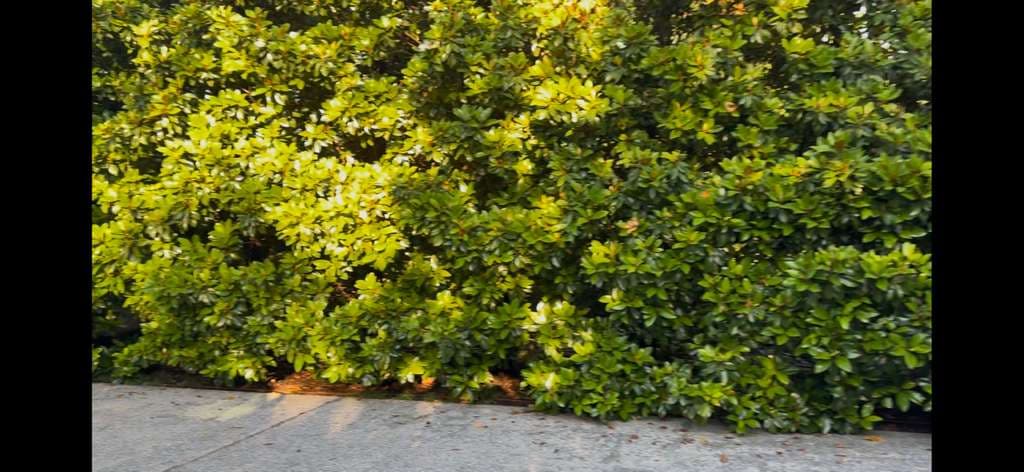
At Arborist USA, we recently responded to a property in Westover Hills, Texas where several Magnolia trees (Magnolia grandiflora) suffered significant structural and vascular damage from a vehicle collision. The impact occurred only three days prior to our inspection, yet the trees were already showing major stress responses and active pest pressure around the damaged tissue.
This is a perfect example of how quickly environmental trauma can affect tree physiology.
The vehicle impact dislodged bark tissue along the lower trunk and root flare area, exposing portions of the xylem and cambial zone. The force of the impact also shifted the root plate slightly to the left-hand side, creating a visible lean in the tree and causing breakage of several lower scaffold branches.
The client’s concern was understandable:
- Will the tree continue leaning?
- Can the tree recover?
- Why are insects already attacking the damaged area?
- Will the lower canopy grow back?
These are important questions, and understanding the science behind traumatic tree injuries is critical when developing a long-term recovery plan.
⸻
Why Vehicle Damage Is So Serious for Trees
When a vehicle impacts a tree, the visible bark damage is often only part of the problem.
The most important tissue in a tree is located directly beneath the bark:
- Cambium
- Phloem
- Xylem
These vascular tissues are responsible for:
- Moving water
- Transporting nutrients
- Carrying carbohydrates and sugars
- Supporting energy production
When bark is ripped away from the root flare area, the tree loses part of its vascular transport system.
According to ISA and TCIA standards, damage to the root flare and lower stem is among the most critical injuries a tree can experience because this area controls the primary flow of water and carbohydrates between the canopy and root system.
⸻
Why We Are Already Seeing Pest Pressure
One of the first things observed during our evaluation was active pest pressure around the exposed xylem tissue.
This is completely normal after traumatic bark injury.
The exposed xylem and phloem release:
- Moisture
- Sugars
- Carbohydrates
- Volatile stress compounds
These materials attract:
- Caterpillars
- Boring insects
- Secondary pests
- Opportunistic insects
The reason is simple:
👉 the tree is essentially leaking nutrients and sugars.
According to Texas A&M AgriLife, stressed and wounded trees become highly attractive to opportunistic pests because damaged tissue emits chemical signals that insects use to locate weakened hosts.
This is why an Integrated Pest Management (IPM) program is critical immediately after a traumatic injury.
⸻
Understanding Bark Sloughing and Vascular Exposure
The bark sloughing observed on these Magnolias is not simply cosmetic.
The bark protects:
- Cambium tissue
- Water transport systems
- Sugar movement
- Internal moisture regulation
When bark is dislodged:
- Vascular flow becomes compromised
- Tissue desiccates
- Pest pressure increases
- Infection risk rises
This creates an open pathway for:
- Fungal pathogens
- Insect invasion
- Internal decay organisms
That is why quick intervention matters.
⸻
The Lean and Root Flare Shift
The impact also shifted portions of the root flare, causing the trees to lean toward the left-hand side.
At this time, the uprooting does not appear catastrophic, but the movement of the root plate is significant enough to warrant correction.
Trees depend on:
- Stable root anchorage
- Even load distribution
- Proper root flare positioning
If left uncorrected, the lean can continue worsening over time as:
- roots destabilize
- soil settles
- tension increases
This is why we are recommending readjustment of the root flare so the trees can be repositioned more perpendicular and structurally balanced.
⸻
Lower Scaffold Branch Damage
Several lower scaffold branches were completely broken and stripped during the collision.
Unfortunately, Magnolia trees are slow compartmentalizers compared to some hardwood species.
The damaged branches will require:
Corrective Flush Cuts
These cuts remove torn tissue and create cleaner wound margins so the tree can begin compartmentalization.
According to ISA pruning standards, corrective pruning after storm or impact damage should focus on:
- removing jagged tissue
- reducing decay potential
- preserving healthy vascular tissue
However, homeowners must understand:
👉 Magnolias may take many years to refill the lower canopy.
Because these lower scaffold branches were completely removed, the open lower section of the tree will remain visually sparse for an extended period.
⸻
Why Magnolias Recover Slowly
Magnolia trees are beautiful but biologically slower to recover from trauma than many other species.
They allocate energy conservatively and often:
- compartmentalize slowly
- regenerate slower
- struggle under stress conditions
This is why building carbohydrate reserves and supporting vigor becomes critical after injury.
⸻
The Importance of Carbohydrates After Trauma
One of the most important parts of this recovery program is carbohydrate supplementation.
Trees produce carbohydrates through:
Photosynthesis
When canopy tissue is lost:
- carbohydrate production drops
- energy reserves decline
- recovery slows
The tree now has to:
- seal wounds
- rebuild vascular tissue
- support roots
- defend against pests
all while operating with reduced energy.
That is why we are recommending:
- dried molasses
- carbohydrate support materials
- soil biology stimulation
These treatments help support microbial activity and improve nutrient cycling in the root zone.
⸻
Micronutrients and Recovery
Micronutrients are another critical part of the treatment protocol.
According to Texas A&M and ISA references, micronutrients support:
- chlorophyll production
- enzyme activity
- tissue regeneration
- stress tolerance
After traumatic injury, micronutrients help:
- improve foliage density
- increase vigor
- support compartmentalization
- stimulate healthier growth
Without proper nutrient availability, the tree cannot rebuild effectively.
⸻
Why an IPM Program Is Necessary
The exposed xylem tissue and declining canopy make these trees vulnerable to:
- caterpillars
- boring insects
- secondary invaders
- fungal pathogens
This is why we are implementing:
Integrated Pest Management (IPM)
An IPM program helps:
- reduce pest pressure
- protect vulnerable tissue
- prevent secondary infestations
- preserve remaining healthy foliage
This is especially important in Westover Hills landscapes where mature ornamental trees are highly valuable.
⸻
Texas A&M, ISA, and TCIA Best Practices
According to Texas A&M, ISA, and TCIA protocols, tree recovery after mechanical injury should focus on:
- reducing stress
- preserving healthy tissue
- supporting root systems
- improving vigor
- mitigating pest pressure
- correcting structural instability
One of the biggest mistakes homeowners make is assuming bark damage is only cosmetic.
In reality:
👉 bark loss is vascular loss
And vascular damage can affect the entire physiology of the tree.
⸻
Long-Term Recovery Expectations
The client should expect:
- sparse lower canopy for several years
- slow tissue regeneration
- extended recovery timelines
However, with:
- proper IPM
- micronutrients
- carbohydrate support
- corrective pruning
- root flare adjustment
the trees have a strong opportunity to stabilize and recover over time.
⸻
Why Immediate Intervention Matters
Mechanical injuries become exponentially worse when:
- pests invade
- fungal pathogens colonize tissue
- moisture enters exposed wood
- stress compounds increase
The sooner the tree is stabilized:
- the greater the recovery potential
- the lower the long-term decline risk
This is why immediate mitigation after vehicle impact is critical.
⸻
Final Thoughts
This Westover Hills project is an excellent example of how quickly traumatic injury can trigger:
- vascular dysfunction
- pest pressure
- canopy decline
- structural instability
The exposed xylem tissue from the vehicle impact immediately attracted insects because of the sugars and carbohydrates leaking from the wound area.
The lower scaffold branch loss will take years to recover, but with:
- corrective pruning
- IPM programs
- micronutrient support
- carbohydrate supplementation
- root flare stabilization
these Magnolia trees have the best opportunity to regain vigor and long-term stability.
At Arborist USA, our focus is not simply cosmetic cleanup.
We focus on:
- tree physiology
- vascular recovery
- structural stability
- long-term preservation
That is the difference between cutting trees and practicing real plant healthcare.
For general tree-care best practices, homeowners can also reference guidance from the Texas A&M Forest Service, https://tfsweb.tamu.edu/trees/, a trusted authority on Texas tree health.
Schedule a professional inspection. Early detection and scientific intervention are the difference between preservation and loss. If you’d like to speak to an arborist, please call us at 817-880-6130 or visit https://www.arboristusa.com/