 4.9 (349 Reviews)
By Henry G. Friar | ISA Certified Arborist® TX-270627A | TDA License No. 1008483 | TCIA Member #268065 | Arborist USA
Are your pine tree needles turning yellow or brown in Westover Hills, Texas? Before assuming your pine tree is dying, it’s important to understand that yellowing needles can indicate several very different conditions, including fungal tip blight, spider mite infestations, soil compaction, and even the tree’s natural needle-shedding cycle. At Arborist USA, we use science-based Plant Healthcare diagnostics to distinguish normal seasonal changes from serious health problems that require professional intervention.
Why Are Pine Tree Needles Turning Yellow in Westover Hills, Texas?
Hello Community, my name is Henry G. Friar, ISA Certified Arborist with Arborist USA, here in Westover Hills, Texas.
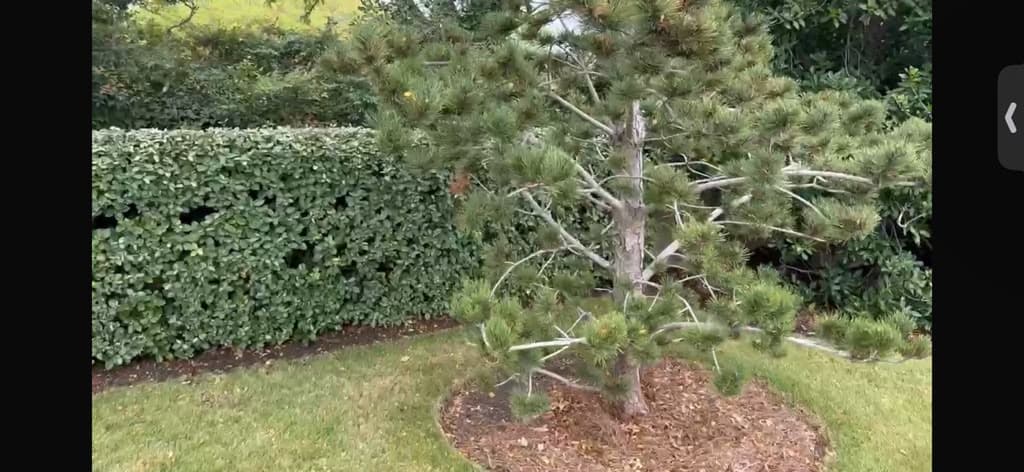
Today, I was called out to evaluate a pine tree experiencing yellowing and browning needles.
One of the first things I look for when evaluating a declining pine tree is where the discoloration is occurring within the canopy.
Are the older needles located toward the interior of the tree turning yellow? Or are the newest needles at the ends of the branches beginning to decline?
That distinction can tell us a great deal about the tree’s condition.
In North Texas, pine trees face environmental challenges that include extreme summer temperatures, extended drought, poorly drained clay soils, soil compaction, insect infestations, and fungal diseases.
Understanding how these conditions affect the tree’s physiology is the first step toward developing an effective treatment plan.
1. Pine Tip Blight — When Fungal Disease Attacks New Growth
One potential cause of pine needle discoloration is a fungal disease commonly referred to as tip blight.
What Is Pine Tip Blight?
Tip blight can be associated with fungal pathogens such as Diplodia sapinea, also known as Sphaeropsis sapinea.
This pathogen is particularly important on susceptible pine species, including Austrian pine and certain other two- and three-needle pines.
The fungus can infect developing shoots, needles, and other susceptible tissues.
When infection becomes established, the affected shoots may stop growing, become discolored, and eventually die.
Common symptoms include:
- Yellowing or browning of newly developing needles.
- Shortened, stunted, or distorted shoots.
- Death of terminal buds and branch tips.
- Resin accumulation on affected shoots.
- Progressive dieback of infected branches.
In some cases, small dark fungal fruiting structures can develop on infected tissues.
However, these symptoms are not exclusive to tip blight. Insects, drought injury, and root dysfunction can produce similar discoloration.
How Oversaturated Soil Can Contribute to Pine Decline
One important condition I evaluate in North Texas is excessive soil moisture.
Pine trees require oxygen within the soil to maintain healthy root respiration.
When soil becomes oversaturated, water occupies the pore spaces that would normally contain air.
This creates a condition known as root-zone hypoxia, meaning the roots are receiving insufficient oxygen.
Without adequate oxygen, roots cannot maintain normal energy production, nutrient uptake, and water absorption.
As root function deteriorates, the tree may become physiologically stressed and less capable of defending itself against opportunistic pathogens.
Here is an important scientific distinction:
Oversaturated soil does not directly cause Diplodia tip blight. The disease requires the presence of its fungal pathogen.
However, prolonged waterlogging and root dysfunction can weaken the tree, potentially increasing its susceptibility to certain diseases.
Diplodia infections are also associated with susceptible new growth, wet conditions that favor spore dispersal and infection, and environmental stress.
How Arborist USA Approaches Tip Blight
Our treatment recommendations depend on the confirmed diagnosis and severity of the disease.
A Plant Healthcare program may include:
- Evaluating drainage and irrigation practices.
- Correcting excessive soil moisture.
- Improving root-zone oxygen availability.
- Examining symptomatic shoots for fungal evidence.
- Submitting plant samples for laboratory diagnosis when necessary.
- Considering appropriately labeled fungicide treatments where warranted.
Fungicides are generally preventive or protective tools. They do not restore shoots that have already died.
The goal is to protect remaining healthy tissues while correcting the environmental conditions contributing to decline.
2. Spider Mites — A Hidden Threat to Pine Trees
Another potential cause of yellowing pine needles is spider mite activity.
Spider mites are extremely small arachnids that feed on plant tissues.
They use specialized mouthparts to puncture cells and remove their contents.
How Spider Mites Damage Pine Needles
When mites feed on pine needles, they damage individual plant cells.
This can produce tiny pale or yellow spots, often described as stippling.
As feeding increases, needles may develop a dull, yellowish, bronze, or brown appearance.
Severe infestations can cause premature needle loss and reduce the tree’s photosynthetic capacity.
Because spider mites are so small, homeowners may notice the discoloration long before they recognize the pest.
Why Drought Stress Matters
In North Texas, prolonged drought and high temperatures can create stressful growing conditions for pine trees.
Certain spider mite species thrive during hot, dry weather, especially when natural predators are disrupted.
Drought-stressed trees may also have a reduced ability to tolerate feeding damage.
However, not every spider mite species behaves the same way.
Some conifer-feeding mites, including spruce spider mites, are most active during cooler spring and fall conditions and may decline during extreme summer heat.
This is why identifying the actual mite species matters before selecting a treatment.
How We Diagnose Spider Mites
One field technique involves holding a white sheet of paper beneath an affected branch and tapping the foliage.
Small moving specks may indicate mite activity.
A hand lens or magnification helps distinguish mites from other small organisms.
We also inspect for stippling, webbing when present, and populations of beneficial predatory mites.
Treatment Recommendations
An effective Integrated Pest Management program may involve:
- Identifying the mite species and confirming active populations.
- Correcting drought stress without oversaturating the soil.
- Protecting beneficial predatory organisms.
- Monitoring infestation severity.
- Applying a properly labeled miticide when justified.
Not every insecticide controls mites, and some broad-spectrum products can actually make spider mite outbreaks worse by eliminating natural predators.
At Arborist USA, we believe proper identification must come before chemical treatment.
3. Soil Compaction — The Underground Problem Homeowners Cannot See
One of the most overlooked causes of pine tree decline is soil compaction.
Here in Westover Hills and throughout the Dallas–Fort Worth Metroplex, many landscapes contain clay-rich soils that can become heavily compacted.
Construction equipment, vehicles, foot traffic, and repeated soil disturbance can compress the soil structure.
What Happens When Soil Becomes Compacted?
Healthy soil contains pore spaces that allow air and water to move through the root zone.
These spaces are known as macropores and micropores.
Macropores are especially important for drainage and oxygen movement.
When soil becomes compacted, larger pore spaces are reduced.
This can result in:
- Reduced oxygen availability.
- Slower water infiltration.
- Restricted root elongation.
- Poor drainage.
- Reduced nutrient uptake.
- Limited biological activity.
- Increased susceptibility to drought and waterlogging stress.
Here is the interesting part.
A pine tree growing in compacted soil can experience drought stress even when water is present in the landscape.
Why?
Because its roots may be unable to explore enough soil volume to obtain the water needed to support the canopy.
At the same time, compacted soils may remain saturated after heavy irrigation or rainfall, limiting oxygen availability.
The tree can therefore experience both drought-related and saturation-related stress at different times.
How Soil Compaction Affects Needle Color
When roots cannot function efficiently, the tree may struggle to absorb water and essential nutrients.
This can interfere with photosynthesis, chlorophyll maintenance, and normal needle development.
Older needles may yellow prematurely, and severe or prolonged stress can eventually affect newer growth.
However, yellowing alone does not prove that soil compaction is the cause.
We must evaluate the actual root-zone conditions.
Our Root-Zone Restoration Approach
At Arborist USA, we may recommend pneumatic soil excavation or aeration using specialized equipment such as an AirSpade.
This equipment uses compressed air to loosen or remove soil around roots with less risk of cutting them than conventional excavation.
Depending on the site, our program may include:
- Measuring soil resistance and evaluating soil structure.
- Identifying drainage restrictions.
- Performing targeted pneumatic soil decompaction.
- Correcting irrigation practices.
- Applying organic mulch while keeping the root flare exposed.
- Evaluating soil nutrients and pH through laboratory analysis.
- Using targeted micronutrients or other soil amendments only when indicated.
Our objective is to restore a more favorable balance between soil oxygen, available water, and healthy root growth.
Healthy roots are the foundation of a healthy pine tree.
4. Natural Needle Shedding — Your Pine Tree May Not Be Sick at All
Now, this is one of the most important points I want homeowners to understand.
Pine trees are evergreen, but that does not mean they keep the same needles forever.
Every pine needle has a limited lifespan.
As needles age, the tree gradually withdraws reusable nutrients from them.
Chlorophyll begins to break down, causing the needles to turn yellow and eventually brown before they fall.
This is a natural physiological process called needle senescence.
Do Pine Trees Shed Their Needles Every Two Years?
Many pine species retain needles for approximately two to four years, although needle longevity varies by species, climate, and growing conditions.
Some species commonly shed older needles after about two years.
Others retain their needles for longer periods.
In North Texas, this natural shedding is often especially noticeable during late summer and fall.
Homeowners may suddenly see large numbers of yellow needles inside the canopy and assume the tree is dying.
But that is not necessarily the case.
How to Recognize Normal Needle Shedding
Natural needle shedding typically affects older needles toward the interior of the canopy.
The outer branch tips remain green and continue producing healthy growth.
The tree may look thinner temporarily, but the living buds and current-season shoots remain vigorous.
If the terminal growth is healthy and green while the older interior needles are turning yellow or brown, the tree is often still viable and may not require any treatment at all.
This is a critical distinction.
Normal shedding does not require fungicide, insecticide, or fertilizer.
The best treatment may simply be proper watering, monitoring, and allowing the tree to complete its natural cycle.
Interior Needle Loss vs. Terminal Growth Decline — The Most Important Diagnostic Clue
When I evaluate pine trees, I pay close attention to the condition of the terminal growth.
Terminal growth refers to the newest shoots and buds located at the ends of branches.
These growing points are important because they represent the tree’s capacity to produce new foliage and extend its branches.
When Interior Needles Turn Brown but Terminal Growth Is Healthy
If the newest needles remain green and the terminal buds are healthy, this is generally a more favorable sign.
The tree may simply be shedding older needles.
Alternatively, it may be responding to environmental stress that can potentially be corrected.
This does not guarantee the tree will recover, but it suggests that important growing tissues are still functioning.
In many cases, these trees are candidates for preservation, especially when root health and structural condition are acceptable.
When Terminal Needles Begin Turning Yellow or Brown
Now we have a different situation.
If the newest needles and terminal shoots begin yellowing, browning, wilting, or dying, we become more concerned.
This may indicate:
- Fungal shoot infection.
- Severe water stress.
- Root-system dysfunction.
- Vascular damage.
- Insect injury.
- Other physiological disorders.
When the terminal bud and associated shoot tissues die, that particular growing point cannot resume normal growth.
If the entire branch loses its living buds and cambial tissue, the branch may die.
However, yellow terminal needles alone do not prove irreversible branch death. We must inspect bud viability, shoot condition, and living tissues before reaching that conclusion.
Understanding the Difference
Observation What It May Indicate
Older interior needles yellow; new tips green Often normal seasonal needle shedding
Interior needle loss with reduced vigor Possible root or environmental stress
Stippled, bronze needles with active mites Possible spider mite injury
Stunted, brown new shoots Possible tip blight or another shoot disorder
Dead terminal buds and shoots More serious localized dieback
Widespread canopy discoloration Requires prompt investigation of roots, water, pests, and disease
The location of the discoloration is often more informative than the color alone.
Why You Should Hire an ISA Certified Arborist to Evaluate Your Pine Trees
One of the biggest mistakes homeowners make is treating every yellow pine tree with the same fertilizer, fungicide, or insecticide.
But consider what we have discussed.
If the tree is experiencing normal needle shedding, it may not need treatment.
If spider mites are active, a fungicide will not solve the problem.
If the root system is suffering from oxygen deprivation, adding more irrigation may make the condition worse.
And if the tree has a confirmed fungal disease, applying nutrients alone will not eliminate the pathogen.
This is why a professional diagnosis matters.
An ISA Certified Arborist has demonstrated knowledge of tree biology, soils, diagnosis, pruning, tree risk, and proper arboricultural practices through an industry-recognized certification program.
At Arborist USA, our Plant Healthcare evaluations focus on identifying the underlying causes of decline before developing a treatment prescription.
We consider the entire growing environment, including the canopy, trunk, root flare, soil structure, drainage, irrigation, pests, and diseases.
Our Plant Healthcare Philosophy
Our approach is straightforward:
Diagnose first. Correct the underlying problem. Treat only when necessary. Monitor the results.
We believe homeowners deserve to understand what is happening to their trees and why a particular treatment is recommended.
Final Thoughts — Can a Pine Tree With Yellow Needles Be Saved?
Absolutely, some pine trees with yellowing needles can be preserved.
But the outcome depends on the underlying cause, severity of damage, and amount of living tissue remaining.
Remember these important principles:
A pine tree with healthy green terminal growth and yellowing older interior needles may simply be going through its normal needle-shedding cycle.
A pine tree with declining terminal shoots, dead buds, and progressive branch dieback requires a more detailed evaluation.
And a pine tree suffering from root-zone problems may benefit from correcting the soil environment before additional damage occurs.
The goal is not to make every yellow needle turn green again.
The goal is to preserve healthy growing tissues, restore favorable growing conditions, and support future growth.
If you’re seeing yellow or brown needles on your pine trees in Westover Hills, Fort Worth, or surrounding North Texas communities, contact Arborist USA for a professional Plant Healthcare evaluation.
ARBORIST USA — WE SAVE SICK TREES!
Henry G. Friar
ISA Certified Arborist® TX-270627A
TDA License No. 1008483
TCIA Member #268065
Plant Healthcare Professional
Arborist USA
Office: 817-880-6130
Website: https://www.arboristusa.com/
For general tree-care best practices, homeowners can also reference guidance from the Texas A&M Forest Service, https://tfsweb.tamu.edu/trees/, a trusted authority on Texas tree health.
Schedule a professional inspection. Early detection and scientific intervention are the difference between preservation and loss. If you’d like to speak to an arborist, please call us at 817-880-6130 or visit https://www.arboristusa.com/
PINE TREE NEEDLES TURNING YELLOW — CAN YOUR TREE BE SAVED? Hello Community, my name is Henry G. Friar, ISA Certified Arborist® TX-270627A, TDA License No. 1008483, TCIA Member #268065, with Arborist USA, here in Westover Hills, Texas. Today, we’re evaluating a pine tree experiencing yellowing and browning needles. Many homeowners immediately assume their pine tree is dying when they see this discoloration. But here’s something important: Not every yellow pine needle means your tree is sick! In this video, I explain four potential causes of yellowing pine needles and how we determine whether a pine tree can be preserved.