 4.9 (349 Reviews)

How Extreme Summer Heat, Evapotranspiration, Soil Compaction, and Water Stress Affect Eagleston Hollies
Eagleston Holly Damage Following the Summer 2026 Heat and Drought
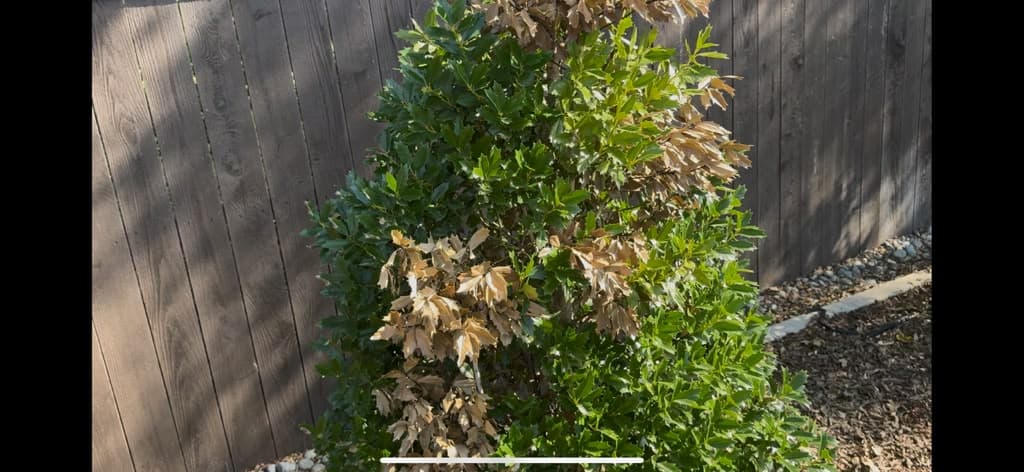
Today, we’re here in Roanoke, Texas, evaluating Eagleston Hollies that have experienced significant foliage damage, branch dieback, and canopy deterioration following the extreme heat and drought conditions of summer 2026.
I’m Henry Friar, ISA Certified Arborist with Arborist USA, and in this video, I explain the science behind what happened to these plants, why supplemental irrigation may not have been enough to prevent damage, and how a properly designed Plant Healthcare program can help support their recovery.
Eagleston Holly (Ilex × attenuata ‘Eagleston’) is a popular evergreen ornamental throughout North Texas.
Homeowners appreciate these plants for their attractive green foliage, dense growth, and ability to provide privacy screening.
However, even established hollies can experience serious physiological stress when environmental conditions exceed their ability to absorb and transport adequate water.
During prolonged periods of excessive heat, low humidity, and limited rainfall, these plants may experience substantial moisture deficits.
The result can include leaf scorch, foliage desiccation, thinning canopies, and permanent twig or branch dieback.
One of the most important things I want homeowners to understand is this:
A tree or shrub can experience drought stress even when an irrigation system is operating regularly.
Let’s examine why.
⸻
1. Understanding Evapotranspiration and Why Hollies Lose Water During Extreme Heat
Evapotranspiration describes the combined loss of water through soil evaporation and plant transpiration.
What Is Transpiration?
Transpiration is the movement of water through a plant and its eventual release into the atmosphere, primarily through microscopic openings in the foliage called stomata.
The root system absorbs water from the soil.
That water moves upward through the xylem, supplying leaves and other living tissues.
As water evaporates from the foliage, the plant must continuously replace that moisture through root absorption.
Under favorable conditions, the root system can generally keep pace with water loss.
However, during periods of extreme heat and low atmospheric humidity, the demand for water can increase substantially.
Why Low Humidity Makes Heat Stress Worse
One of the most important scientific concepts in this process is vapor pressure deficit (VPD).
Vapor pressure deficit describes the difference between the amount of moisture present in the air and the amount the air could hold at saturation at the same temperature.
When temperatures rise and relative humidity decreases, VPD generally increases.
This creates a stronger atmospheric demand for moisture.
Water vapor can leave the foliage more rapidly when stomata remain open.
If the roots cannot replace that moisture, the plant begins experiencing water stress.
The plant may respond by closing its stomata to conserve water.
However, stomatal closure also restricts carbon dioxide uptake, reducing photosynthesis.
If this condition continues, the plant may experience reduced growth, foliage damage, and eventually tissue mortality.
Why Eagleston Hollies Can Be Damaged Even With Supplemental Irrigation
This is something I frequently explain to homeowners throughout Roanoke, Southlake, Keller, and surrounding North Texas communities.
An irrigation system may be running, but that does not automatically mean sufficient water is reaching the active root zone.
Several conditions can interfere with water availability:
- Irrigation may wet only the soil surface.
- Water may run off compacted soil before infiltrating.
- The original nursery root ball may dry differently from the surrounding native soil.
- Soil may dry faster than irrigation can adequately replenish available moisture.
- Damaged or poorly established roots may be unable to absorb sufficient water.
During extreme heat, atmospheric water demand may exceed the plant’s ability to replace moisture, even when some water remains in the soil.
This is why proper irrigation must be evaluated according to actual soil moisture and root-system conditions rather than simply the number of minutes programmed into an irrigation controller.
⸻
2. Understanding Leaf Scorch, Desiccation, and Permanent Branch Dieback
When Eagleston Hollies experience severe moisture deficits, the foliage may begin showing signs of dehydration.
The earliest symptoms may include wilting, curling, or discoloration.
As stress continues, leaf margins or entire leaves may turn brown.
This is known as leaf scorch or desiccation injury.
What Happens When Plant Tissue Becomes Necrotic?
Necrosis refers to the death of living plant tissue.
Once a leaf or branch has become completely necrotic, that tissue cannot be restored through watering or fertilizer applications.
This is an important distinction.
A plant may still be alive even though portions of its canopy are dead.
The objective is to determine which branches retain living tissue and which have experienced irreversible dieback.
Why Some Hollies Develop Permanent Gaps in Their Canopies
When smaller branches die, the foliage attached to those branches is permanently lost.
This can create openings within the plant’s canopy.
If the surrounding branches remain alive and healthy, new growth may eventually help fill some of these gaps.
However, the degree of recovery depends on the amount of surviving tissue, available buds, plant vigor, and environmental conditions.
Not every severely damaged Eagleston Holly will regain its original shape or density.
This is why evaluating the remaining live structure is so important before deciding whether to preserve or replace a plant.
⸻
3. Proper Pruning: Removing Dead Tissue Without Damaging Healthy Branches
One of the first corrective steps I recommend is removing branches that have experienced complete tissue mortality.
However, pruning must be performed carefully.
Remove Deadwood Back to the Appropriate Parent Branch
When a branch is completely dead, it should be removed back to an appropriate living branch attachment or its parent branch.
Proper pruning cuts should preserve the branch collar and avoid unnecessary injury to healthy tissues.
We do not recommend leaving long dead stubs.
We also avoid cutting unnecessarily into healthy structural branches.
The objective is to remove dead material while preserving as much living foliage and functional branch structure as possible.
Avoid Excessive Pruning During Recovery
A stressed plant needs its remaining healthy foliage to continue photosynthesis.
Removing excessive green foliage can reduce the plant’s ability to produce carbohydrates.
For this reason, corrective pruning should focus primarily on dead, broken, or clearly nonfunctional tissue.
Major aesthetic reshaping should generally be postponed until the plant demonstrates sufficient recovery.
When Should a Severely Damaged Holly Be Replaced?
If the plant has lost a substantial percentage of its living structure, replacement may be more practical than attempting to restore its original appearance.
However, if the root system remains functional and sufficient healthy branches survive, preservation may be reasonable.
At Arborist USA, we evaluate each plant individually before making that recommendation.
⸻
4. Why High-Nitrogen Fertilizer Should Not Be the First Treatment
One of the biggest mistakes homeowners can make after severe drought damage is immediately applying large amounts of nitrogen fertilizer.
The intention may be good.
Homeowners want their hollies to produce new leaves quickly.
However, stimulating rapid shoot growth while the root system remains compromised can increase the plant’s demand for water and nutrients.
Understanding Nitrogen and Vegetative Growth
Nitrogen is an essential macronutrient involved in chlorophyll production, amino acid synthesis, protein formation, and vegetative growth.
Adequate nitrogen supports healthy foliage development.
However, excessive nitrogen can encourage rapid shoot growth that may not be supported by the recovering root system.
This is particularly concerning when plants are already experiencing moisture stress.
Our Initial Approach: Stabilization Before Growth Stimulation
For these Eagleston Hollies in Roanoke, our initial Plant Healthcare approach emphasizes root-zone stabilization rather than aggressive fertilization.
We are incorporating appropriate soil-conditioning materials, seaweed- and kelp-based amendments, micronutrients where indicated, and conservative nitrogen management.
The objective is to maintain favorable growing conditions while allowing the plants to recover from summer stress.
Why We Will Reevaluate Nitrogen in Late Spring 2027
Rather than immediately applying high nitrogen, I recommend reevaluating the hollies during late spring 2027.
This provides approximately six months for observation and stabilization following the initial treatment period.
However, six months is a management interval, not a universal physiological requirement.
Before introducing additional nitrogen, we will evaluate:
- New foliage development.
- Remaining live branch structure.
- Root-zone moisture and drainage.
- Soil nutrient availability.
- Overall plant vigor.
- Signs of continuing environmental or disease stress.
If the plants demonstrate adequate recovery and soil testing indicates a nutritional need, additional nitrogen may be appropriate.
The objective would be to support healthy new growth that could gradually improve canopy density.
Fertilizer cannot revive dead branches. It can only support growth from surviving living tissues when nutrients are needed.
⸻
5. Why Soil Aeration Is Important for Stressed Eagleston Hollies
Healthy roots require oxygen.
This is a fundamental principle of plant physiology.
Roots use oxygen during aerobic cellular respiration to produce ATP, which supports essential metabolic processes.
When soil becomes severely compacted or remains saturated for extended periods, oxygen movement can become restricted.
Understanding Soil Compaction
Compaction occurs when pressure forces soil particles closer together.
This can reduce the volume and connectivity of soil pore spaces.
Large soil pores, called macropores, are especially important for drainage and gas exchange.
When these pore spaces are compressed, water infiltration may slow and root-zone oxygen availability may decline.
Compacted soil can also physically restrict root growth.
Using a Pneumatic AirSpade Tool
At Arborist USA, we use specialized pneumatic soil excavation equipment, commonly called an AirSpade, when site conditions warrant treatment.
This equipment uses compressed air to loosen soil and expose root systems.
When properly performed, pneumatic soil treatment can help reduce localized compaction and improve opportunities for water movement and oxygen exchange.
It can also allow us to inspect root conditions and identify potential root-flare problems.
However, soil aeration must be matched to the actual site conditions.
If poor drainage, overwatering, or repeated traffic remains unresolved, the benefits may be limited.
Protecting the Root Zone After Aeration
Once soil conditions have been improved, homeowners should avoid driving vehicles, parking equipment, or repeatedly compacting the treated root zone.
Maintaining appropriate organic mulch and controlling unnecessary foot or equipment traffic can help preserve soil structure.
⸻
6. Seaweed Carbon, Kelp, Micronutrients, and Soil Biological Activity
Our initial Plant Healthcare program includes selected soil-conditioning and nutritional materials.
These materials are intended to complement proper irrigation, root-zone management, and the plant’s natural recovery processes.
Seaweed- and Kelp-Based Amendments
Seaweed and kelp products may contain organic compounds, minerals, and other substances that can influence plant or soil biological responses.
Some research has identified potential benefits from certain seaweed extracts under specific conditions.
However, effectiveness depends on the formulation, application rate, plant species, and environmental conditions.
These products should not be considered substitutes for water, oxygen, or correction of significant soil limitations.
Micronutrient Management
Micronutrients such as iron, manganese, zinc, and copper are required in relatively small amounts for normal plant function.
They participate in enzyme systems, photosynthesis, and other physiological processes.
However, supplementation should be based on plant symptoms, soil conditions, and diagnostic findings.
Applying nutrients that are already sufficient may provide little benefit.
Supporting Soil Microorganisms
Healthy soil contains microorganisms that participate in nutrient cycling and organic-matter decomposition.
Carbon-based amendments may influence microbial activity.
However, increased microbial activity does not automatically mean improved tree health.
Our goal is to maintain a balanced root-zone environment rather than simply stimulate biological activity without understanding the soil conditions.
⸻
7. Proper Summer Watering for Eagleston Hollies in North Texas
Water management is one of the most important components of recovery.
During extreme summer heat, hollies may experience high atmospheric moisture demand.
However, watering too frequently can create prolonged saturation and oxygen stress.
Water the Root Zone, Not Just the Surface
Irrigation should reach the original root ball and surrounding soil where active roots are developing.
Shallow watering may leave deeper portions of the root zone dry.
The correct amount depends on plant size, soil texture, drainage, irrigation output, and weather conditions.
Monitor Soil Moisture Before Irrigating
Homeowners should check soil moisture below the surface rather than assuming the plants need water based solely on the appearance of the lawn.
The objective is to maintain adequate plant-available moisture without keeping the root zone continuously saturated.
Can Light Foliage Misting Help During Extreme Heat?
Light foliage misting can temporarily cool leaf surfaces under certain conditions.
However, the benefit may be brief, especially during hot, dry, or windy weather.
Misting does not replace adequate root-zone irrigation.
Repeatedly wetting foliage can also increase the risk of some leaf diseases, particularly when leaves remain wet for extended periods.
For this reason, routine evening misting is not generally recommended.
If supplemental misting is considered during extreme heat, brief early-morning applications are preferable, and foliage should dry promptly.
The primary priority must remain adequate soil moisture, proper drainage, and healthy root function.
⸻
8. Our Plant Healthcare Recovery Program for Roanoke Eagleston Hollies
For the affected Eagleston Hollies, our approach focuses on correcting environmental limitations and preserving the remaining healthy plant structure.
Phase One — Fall 2026: Stabilization
The initial phase includes evaluating the root zone, correcting identifiable compaction where appropriate, maintaining adequate irrigation, and applying selected soil-conditioning and nutritional materials.
Corrective pruning will remove fully dead branches while preserving healthy foliage.
Aggressive high-nitrogen fertilization will be avoided unless a documented deficiency requires treatment.
Phase Two — Winter Monitoring
During winter, we will monitor plant condition, soil moisture, drainage, and remaining live branch structure.
Because Eagleston Hollies are evergreen, they continue to require appropriate moisture management even during cooler months.
Phase Three — Late Spring 2027: Recovery Evaluation
During late spring, we will reevaluate new growth and canopy density.
If the plants demonstrate adequate physiological recovery, we may consider additional nutritional support where testing indicates a need.
The objective is to encourage healthy foliage development from living buds and branches.
Phase Four — Long-Term Root-Zone Protection
The final component is prevention.
This includes maintaining appropriate irrigation, protecting the root zone from compaction, monitoring soil conditions, and adjusting Plant Healthcare treatments according to actual plant response.
⸻
9. How Long Will It Take for Eagleston Hollies to Recover?
Recovery depends on the severity of damage.
Plants with healthy root systems and substantial remaining live tissue may produce noticeable new growth during the following growing season.
Plants with extensive branch mortality may require a longer period to improve their appearance.
Some may never regain their original density or shape.
For severely stressed plants, I generally recommend evaluating recovery over the next one or two growing seasons.
However, this is not a guarantee.
If the root system has experienced extensive mortality or the plant has lost too much living structure, replacement may be necessary.
The most important consideration is whether sufficient living tissue remains to support continued growth.
⸻
10. Final Recommendations: Protect the Roots Before Forcing New Growth
The Eagleston Hollies we evaluated in Roanoke, Texas, demonstrate how severe summer heat and drought can affect ornamental evergreens.
The combination of elevated atmospheric moisture demand, limited water availability, and possible root-zone limitations can lead to significant foliage desiccation and branch dieback.
Once tissue becomes completely necrotic, it cannot be restored.
However, plants retaining healthy roots and living branches may have an opportunity to recover.
Our recommendation is to remove dead tissue through proper pruning, maintain appropriate irrigation, correct documented soil compaction, and support favorable root-zone conditions.
We will avoid aggressive high-nitrogen fertilization during the initial recovery period.
Instead, we will monitor plant response and reevaluate nutritional needs during late spring 2027.
Remember: Healthy foliage begins with healthy roots, and healthy roots depend on healthy soil.
At Arborist USA, our goal is to provide science-based Plant Healthcare programs that address the underlying causes of tree and shrub decline.
Schedule an Eagleston Holly or Tree Health Evaluation in Roanoke, TX
Are your Eagleston Hollies turning brown, losing foliage, or developing dead branches after the summer heat?
Contact Arborist USA for a professional evaluation of your plants, irrigation conditions, and root-zone environment.
ARBORIST USA
Phone: 817-880-6130
Email: [email protected]
Website: www.arboristusa.com
Henry G Friar
ISA Certified Arborist® TX-270627A
TCIA Member #268065
Science-Based Plant Healthcare for Roanoke, Southlake, Keller, Trophy Club, Westlake, and surrounding North Texas communities.
For general tree-care best practices, homeowners can also reference guidance from the Texas A&M Forest Service, https://tfsweb.tamu.edu/trees/, a trusted authority on Texas tree health.
Schedule a professional inspection. Early detection and scientific intervention are the difference between preservation and loss. If you’d like to speak to an arborist, please call us at 817-880-6130 or visit https://www.arboristusa.com/
Are your Eagleston Hollies turning brown, losing foliage, or developing dead branches after the extreme heat and drought of summer 2026?
Today, we’re in Roanoke, Texas, evaluating Eagleston Hollies that have experienced severe heat stress, drought damage, foliage desiccation, and branch dieback.
I’m Henry G Friar, ISA Certified Arborist with Arborist USA, and in this video, I explain the science behind these symptoms and the Plant Healthcare treatments we’re using to support recovery.