 4.9 (349 Reviews)
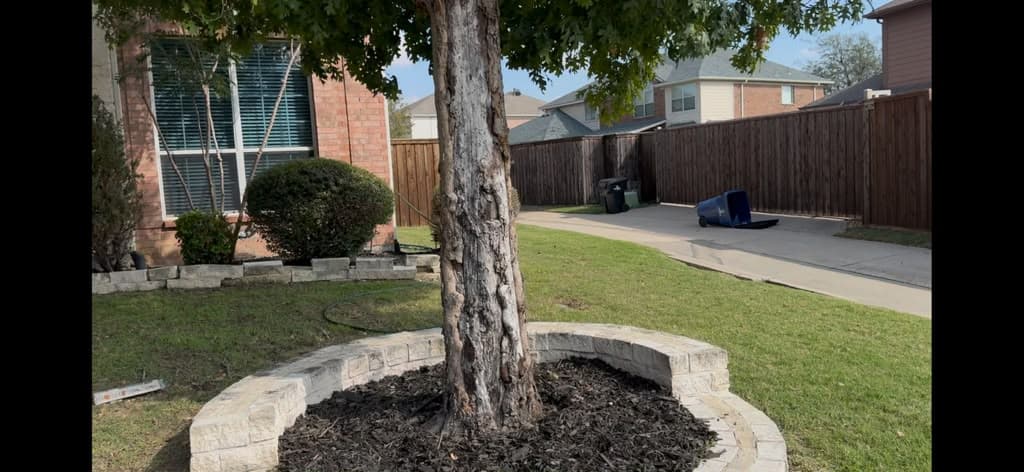
Today we’re here in Hudson Oaks, Texas, inspecting two mature Shumard Red Oaks (Quercus shumardii) that are experiencing significant structural deterioration, basal decay, and environmental stress.
What makes this particular inspection interesting is that both trees are showing similar symptoms, yet their long-term outlooks are dramatically different.
One tree has developed severe structural defects, including vertical fractures extending through portions of the main stem, significant basal deterioration, and an asymmetrical canopy leaning toward the residence.
My recommendation for this tree is complete removal.
The second Shumard Red Oak is also experiencing basal deterioration and previous vascular injury. However, this tree is demonstrating an encouraging biological response through compartmentalization and the development of new woundwood around the affected area.
For this second tree, preservation may still be possible through a comprehensive Plant Healthcare program, continued structural evaluation, and long-term monitoring.
This is an important lesson for homeowners.
Just because a tree is alive doesn’t necessarily mean it’s structurally safe.
And just because a tree has a cavity doesn’t automatically mean it needs to be removed.
The difference lies in understanding the tree’s structural integrity, biological response, and potential consequences of failure.
⸻
Understanding the Two Shumard Red Oaks
During my inspection, I identified several important conditions affecting these trees.
Both Shumard Red Oaks have experienced substantial deterioration around their lower trunks.
The affected areas include:
- Basal cavities
- Bark deterioration and sloughing
- Exposed woody tissue
- Suspected flatheaded wood-borer activity
- Previous environmental injury
- Evidence of internal wood deterioration
- Changes in canopy development
However, one tree has progressed into a much more serious structural condition.
That tree has developed vertical fractures within the main stem.
Those fractures are especially concerning because they may indicate that the remaining wood is no longer adequately resisting the mechanical forces acting on the trunk.
The second tree does not exhibit the same reported fracture condition and is developing woundwood around its existing injury.
These differences are fundamental to our Tree Risk Assessment.
⸻
Flatheaded Borer Beetles and Vascular Injury
One of the contributing factors we’re investigating is a significant infestation of flatheaded wood-boring beetles.
Flatheaded borers belong to the beetle family Buprestidae.
These insects commonly attack trees that have already experienced environmental stress, although some species can also attack otherwise vigorous hosts.
Adult beetles deposit eggs on susceptible bark.
After hatching, larvae enter the tissues beneath the bark and begin feeding.
Depending on the species, larvae may feed through the inner bark, phloem, cambial region, and outer sapwood.
This can cause significant damage to the tree’s vascular tissues.
How Flatheaded Borer Larvae Damage Trees
As larvae feed, they create galleries beneath the bark.
These galleries can interfere with the normal function of living tissues.
The phloem transports carbohydrates produced through photosynthesis to other portions of the tree.
The cambium produces new xylem and phloem.
The xylem conducts water and dissolved minerals upward through the tree.
When these tissues are extensively damaged, the tree may experience reduced vascular function, localized tissue death, and progressive canopy decline.
Severe infestations can contribute to bark separation and exposed sapwood.
However, borer galleries alone do not establish that the insects initiated the decline. Flatheaded borers frequently colonize trees already weakened by drought, heat, mechanical injury, or other stresses.
Determining whether the insects were the primary cause or a secondary contributor is an important part of the diagnostic process.
⸻
Bark Sloughing Exposes the Tree to Additional Environmental Stress
As bark begins separating from the trunk, the underlying wood becomes exposed to the surrounding environment.
This creates another problem.
The bark normally helps protect living tissues beneath it from mechanical injury, temperature extremes, and direct solar radiation.
Once that protection is lost, the exposed trunk becomes more vulnerable to additional injury.
In North Texas, this is particularly concerning during the summer.
Temperatures regularly exceed 100°F.
Direct sunlight can cause bark and exposed wood surfaces to become substantially hotter than the surrounding air.
When vulnerable cambial tissues are exposed to excessive heat, additional cell injury can occur.
This is commonly associated with sunscald or solar injury.
⸻
Understanding Sunscald on Shumard Red Oaks
Sunscald is a form of temperature-related injury affecting tree bark and underlying living tissues.
In North Texas, we encounter two important environmental situations.
Winter Sunscald
During winter, sunlight can warm exposed bark during the day.
Rapid temperature changes, especially when followed by freezing temperatures, can contribute to tissue injury.
This is particularly concerning on susceptible trees with exposed trunks.
Summer Solar Injury
During summer, intense solar radiation can cause bark temperatures to rise significantly.
When protective bark has already been damaged or removed, exposed cambial tissues become more vulnerable.
The resulting injury can contribute to:
- Cambial necrosis
- Bark separation
- Wound expansion
- Reduced vascular function
- Increased susceptibility to opportunistic organisms
On these Hudson Oaks Shumard Red Oaks, the suspected interaction between borer activity, bark sloughing, and subsequent solar exposure deserves careful consideration.
One injury can create conditions that make the next injury more damaging.
This is the cascade of environmental and biological stress that we frequently discuss at Arborist USA.
⸻
Basal Rot and Cavities in Mature Red Oaks
Both trees have developed significant cavities near the base of their trunks.
Basal cavities can form following injuries that expose wood to decay organisms.
Over time, fungi capable of decomposing wood may colonize susceptible tissues.
Some decay fungi break down cellulose and hemicellulose.
Others also degrade lignin.
These compounds are important components of wood’s mechanical structure.
As decay progresses, the wood may lose strength.
However, the presence of a cavity does not automatically tell us how much load-bearing capacity remains.
That requires evaluating the location, dimensions, extent of decay, remaining sound wood, and the forces acting on the structure.
Why Basal Decay Is Particularly Concerning
The lower trunk transfers mechanical forces from the canopy into the root system.
Wind pushes against the crown.
Branches bend.
The trunk transfers those forces downward.
The root system distributes them into the surrounding soil.
When substantial deterioration occurs near the base, the tree may lose part of the structure responsible for transferring those forces.
This becomes particularly concerning when basal decay occurs alongside:
- Vertical fractures
- Severe canopy imbalance
- Significant directional loading
- Root deterioration
- High-value targets
That is the combination we’re evaluating in the first Shumard Red Oak.
⸻
Vertical Fractures Are a Major Warning Sign
One of the most serious findings on the first tree is the presence of vertical fractures extending through portions of the main stem.
A vertical fracture is not simply a cosmetic defect.
Depending on its depth, length, location, and relationship to internal decay, it can indicate that wood fibers have separated under mechanical stress.
This is especially concerning when the fracture occurs within a major load-bearing section of the trunk.
Wood is an anisotropic material, meaning its mechanical properties differ depending on the direction in which forces are applied.
Wood fibers generally run longitudinally through the stem.
When a crack develops along those fibers, the trunk may begin separating into sections.
The remaining sound wood must then carry forces that were previously distributed across a larger structural area.
Why Vertical Fractures Can Increase Failure Potential
Imagine a large wooden column supporting tremendous weight.
Now imagine a fracture developing vertically through part of that column.
The column may continue standing.
But its mechanical behavior has changed.
The same principle applies to a mature tree.
A significant vertical fracture may reduce the ability of the trunk to resist bending, torsion, and other forces.
During severe weather, additional loading may cause the fracture to propagate.
The concern becomes greater when internal decay has already reduced the amount of sound wood available.
A vertical fracture associated with basal decay is a structural warning that deserves immediate professional evaluation.
Not every vertical crack indicates imminent failure. Some are superficial or associated with growth and temperature changes. The concern in this case is the reported combination of significant fractures, basal deterioration, and directional canopy loading.
⸻
The Asymmetrical Canopy Creates Additional Mechanical Stress
Another major concern with the first Shumard Red Oak is the loss of substantial canopy on one side.
The remaining canopy has become asymmetrical.
A large portion of the tree’s remaining weight is now concentrated toward the residence.
This changes the distribution of mechanical forces throughout the trunk.
A balanced canopy does not eliminate the possibility of failure, but major changes in canopy architecture can alter the bending and torsional loads acting on a tree.
Understanding Directional Loading
A large scaffold branch extending away from the trunk creates leverage.
The farther its weight is distributed from the supporting structure, the greater the bending moment it can create.
Now consider a mature Red Oak with significant canopy loss on one side.
The remaining branches may create uneven loading.
If that loading is directed toward a house, the potential consequences of structural failure become more serious.
For this tree, the combination of vertical fractures, basal decay, and asymmetrical canopy loading toward the residence is the primary reason removal is being recommended.
⸻
Tree Risk Assessment Is More Than Identifying Disease
This is where Tree Risk Assessment becomes extremely important.
A tree can have an active biological problem and still possess sufficient structural integrity for preservation.
Another tree may have healthy foliage but contain defects that make retention unreasonable.
When evaluating risk, we consider several questions.
What Is the Likelihood of Failure?
We evaluate the condition of the structure, the defect, and the circumstances under which failure may occur.
For this first Shumard Red Oak, the significant vertical fractures and basal deterioration raise serious concerns about the likelihood of structural failure.
The precise likelihood rating must be established through a documented assessment that specifies the potential failure mode, conditions, and assessment period.
What Is the Likelihood of Impact?
Next, we evaluate the targets.
In this case, the residence is an important target because of its proximity to the compromised tree and the direction of the remaining canopy.
Target occupancy and the actual failure path are important considerations.
What Are the Consequences of Failure?
A large mature Red Oak can contain tremendous woody mass.
If a major stem fails and strikes a residence, the consequences may include substantial structural damage and potential injury.
The combination of failure likelihood, impact likelihood, and consequences determines the overall risk classification.
⸻
Why Removal Is Recommended for the First Shumard Red Oak
I don’t like recommending the removal of mature trees.
These trees provide tremendous benefits to the property and community.
They offer shade, wildlife habitat, stormwater interception, cooling, and decades of landscape value.
But preservation cannot come at the expense of reasonable safety.
For this first Shumard Red Oak, we’re dealing with several serious conditions simultaneously.
Significant basal deterioration.
Major vertical fractures.
Asymmetrical canopy architecture.
Directional loading toward the residence.
Potentially serious consequences if failure occurs.
Based on these observed conditions, my recommendation is complete removal.
The objective is addressing the structural hazard under controlled conditions rather than allowing an unpredictable failure event to determine the outcome.
Until removal is completed, access to the potential failure zone should be restricted as practical, and the tree should be evaluated promptly for any additional movement or fracture progression.
⸻
The Second Shumard Red Oak Is Responding Differently
Now let’s look at the second tree.
This Shumard Red Oak also contains a basal cavity and evidence of previous injury.
However, the biological response is different.
The tree is developing new woundwood around portions of the damaged area.
This is an encouraging sign because it demonstrates that living cambial tissues remain active around the wound margins.
The tree is attempting to isolate damaged tissues and produce new wood around the injury.
This process is associated with CODIT — Compartmentalization of Decay in Trees.
⸻
Understanding CODIT
Trees do not heal injuries the same way human skin heals.
Instead, trees compartmentalize.
They establish anatomical and chemical boundaries that help limit the spread of dysfunction and decay.
The CODIT model describes four major walls involved in this process.
Wall 1 — Vertical Spread
Wall 1 helps resist the vertical movement of dysfunction and decay through the vascular system.
It is generally considered the weakest of the four walls.
Wall 2 — Inward Spread
Wall 2 is associated with growth-ring boundaries and helps resist inward movement toward the center of the stem.
Wall 3 — Lateral Spread
Wall 3 involves ray tissues that help resist radial and lateral movement of decay.
Wall 4 — New Protective Wood
Wall 4 develops as the tree produces new wood after injury.
This barrier zone helps separate newly formed tissues from wood that was present when the injury occurred.
Wall 4 is particularly important because it represents the tree’s ability to protect future growth from existing damage.
⸻
Woundwood Development Is an Encouraging Sign
On the second Shumard Red Oak, we’re observing woundwood developing around the damaged area.
That tells us the tree is still producing new tissue.
Over time, woundwood may gradually grow over the exposed area.
However, there is an important distinction.
Wound closure does not automatically mean internal decay has stopped or that the tree is structurally sound.
A tree can develop substantial woundwood while decay continues within older wood.
Therefore, the second tree’s response is encouraging, but it does not eliminate the need for structural assessment.
The remaining sound wood and internal decay conditions must still be evaluated before concluding that long-term preservation is appropriate.
⸻
Why the Second Tree May Be Salvageable
The second Shumard Red Oak appears to have several characteristics that make preservation worth considering.
The tree is demonstrating active woundwood development.
There is evidence of compartmentalization.
The reported major vertical fractures affecting the first tree are not present in the second tree.
And there may be enough functional canopy and root system remaining to support continued recovery.
For this tree, I believe a comprehensive Plant Healthcare program may be beneficial, provided its structural condition is determined to be acceptable.
Our objective is supporting the living tissues that remain while reducing additional environmental and biological stress.
⸻
Integrated Pest Management for Flatheaded Borers
The first component of our preservation strategy is an Integrated Pest Management program.
IPM means we do not simply apply insecticide without understanding the pest.
We begin by identifying the organism, determining whether the infestation is active, and evaluating the severity of damage.
Flatheaded borers frequently take advantage of stressed trees.
Therefore, controlling the insects without correcting the underlying environmental problems may provide limited long-term benefit.
What Our IPM Program Will Address
Our program will focus on:
- Monitoring for active borer galleries
- Identifying the responsible insect species
- Evaluating bark and cambial damage
- Inspecting for new exit holes
- Monitoring canopy condition
- Considering appropriately labeled insecticide treatments when justified
Timing is extremely important.
Many wood-boring insect treatments are more effective when directed toward susceptible life stages before larvae become protected deep within the wood.
Existing galleries and dead tissue cannot be reversed with insecticide.
The objective is preventing additional damage where treatment is appropriate.
⸻
Micronutrient Support for the Recoverable Red Oak
The second component of our Plant Healthcare program involves evaluating micronutrient availability.
Micronutrients are required in relatively small amounts, but they perform important biological functions.
Iron contributes to processes necessary for chlorophyll formation.
Manganese participates in photosynthetic reactions.
Zinc supports enzyme activity and growth regulation.
Other micronutrients contribute to cellular metabolism and defense.
However, applying micronutrients without confirming a deficiency or availability problem is not automatically beneficial.
Our objective is determining whether soil chemistry and nutrient availability are limiting the tree’s recovery.
Where appropriate, targeted supplementation may support healthy physiological function.
⸻
Soil Remediation Is Essential
The third component of our program focuses on the root environment.
When a tree is recovering from major vascular injury and canopy stress, the root system becomes extremely important.
Healthy roots require:
- Adequate oxygen
- Appropriate soil moisture
- Functional pore space
- Suitable soil structure
- Adequate mineral nutrition
- Space for new root development
Compacted soil can reduce macroporosity and oxygen diffusion.
Excessive irrigation can contribute to root-zone hypoxia.
Drought can reduce water availability and photosynthesis.
These conditions can further weaken a tree already experiencing borer damage and basal deterioration.
Our objective is correcting any identified soil limitations rather than simply applying products to the canopy.
⸻
Pneumatic Soil Aeration May Be Beneficial
Where soil compaction is confirmed, pneumatic soil aeration may be considered.
Compressed-air equipment can help loosen compacted soil while reducing unnecessary injury to existing woody roots.
The objective is improving the physical environment surrounding the absorbing root system.
Potential benefits include improved:
- Macroporosity
- Oxygen diffusion
- Water infiltration
- Root penetration
- Soil biological conditions
However, excavation near structurally important roots must be carefully planned, particularly on trees already containing basal cavities.
We do not want soil remediation to create additional anchorage problems.
⸻
Proper Irrigation Supports Recovery
Water management is another critical consideration.
Shumard Red Oaks require adequate moisture, but prolonged saturation can negatively affect root function.
The objective is maintaining appropriate plant-available water without keeping the soil continuously waterlogged.
During extreme North Texas summers, drought stress can become severe.
When soil moisture becomes limiting, stomata close to conserve water.
That reduces carbon dioxide uptake and photosynthesis.
As carbohydrate production declines, the tree has fewer resources available for growth, defense, and compartmentalization.
For a tree attempting to recover from previous vascular injury, maintaining an appropriate moisture balance becomes especially important.
⸻
Preserve Healthy Foliage During Recovery
One of the biggest mistakes we can make with a stressed tree is removing too much healthy foliage.
Leaves produce carbohydrates through photosynthesis.
Those carbohydrates support:
- Root respiration
- New root growth
- Defense responses
- Woundwood production
- Compartmentalization
- Vascular maintenance
The second Shumard Red Oak needs its remaining healthy canopy.
Pruning should focus on clearly defined objectives, such as removing confirmed deadwood or addressing structural defects.
Aggressive thinning and lion-tailing should be avoided.
For general tree-care best practices, homeowners can also reference guidance from the Texas A&M Forest Service, https://tfsweb.tamu.edu/trees/, a trusted authority on Texas tree health.
Schedule a professional inspection. Early detection and scientific intervention are the difference between preservation and loss. If you’d like to speak to an arborist, please call us at 817-880-6130 or visit https://www.arboristusa.com/
Today we’re inspecting two mature Shumard Red Oaks (Quercus shumardii) experiencing significant basal decay, large cavities, suspected flatheaded borer damage, and progressive canopy decline.
Both trees are struggling, but there’s one major difference.
One tree may be saved. The other has structural defects serious enough that I’m recommending removal.
In this video, I explain the science behind tree decay, vertical trunk fractures, CODIT compartmentalization, and why two trees with similar symptoms can have completely different outcomes.