 4.9 (349 Reviews)

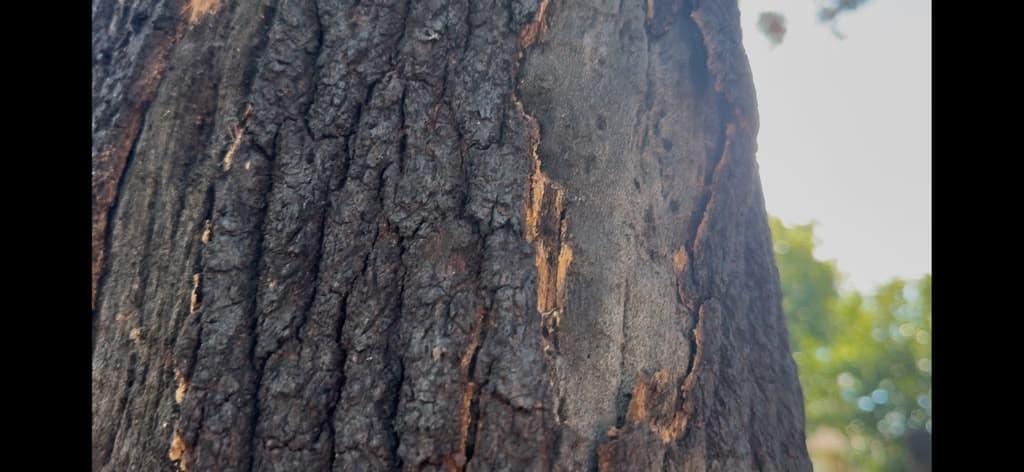
Cambium Injury, Xylem Damage, Structural Failure Risk, and Tree Removal: Severe Fire Damage to a Mature Post Oak in Keller, Texas
Cambium Injury, Xylem Damage, Structural Failure Risk, and Tree Removal
Today, we’re here in Keller, Texas, evaluating a mature Post Oak (Quercus stellata) that has suffered extensive fire damage.
I was called out to inspect this tree and determine whether it has a reasonable opportunity for survival or whether removal would be the most responsible recommendation.
During my evaluation, I observed extensive bark sloughing, severe heat injury extending vertically along the trunk, significant damage to major scaffold branches, and a crown that no longer retains foliage.
Based on the visible injury, I estimate that approximately 30–40% of the trunk’s circumference has been affected by severe fire exposure in the damaged areas.
The injury extends from the lower trunk toward the first major branch junction and continues into the upper stems and crown.
My primary concern is not simply whether the tree could produce new foliage.
It is whether the tree can maintain sufficient living vascular tissue and structural integrity to remain standing safely.
Based on the severity and extent of the observed damage, I do not consider this Post Oak a reasonable candidate for preservation. My recommendation is removal.
Let’s examine the science behind that decision.
⸻
1. Understanding the Cambium: The Living Growth Layer Beneath the Bark
The vascular cambium is a thin layer of living cells located between the secondary xylem and secondary phloem.
It produces new xylem toward the inside of the stem and new phloem toward the outside.
This process allows the trunk and branches to increase in diameter over time.
What Happens When Fire Damages the Cambium?
The cambium is vulnerable to excessive temperatures.
When fire heats the bark and underlying tissues sufficiently, living cambial cells can die.
Once cambial tissue becomes necrotic, that damaged section cannot resume normal growth.
The tree may attempt to produce woundwood from surviving cambial tissue along the edges of the injury.
However, extensive injuries can require many years to close, and some wounds never close completely.
Why Bark Sloughing Is a Serious Warning Sign
During my inspection, I observed substantial areas where the bark had separated and fallen away.
This is commonly described as bark sloughing.
Bark separation following fire can indicate severe damage to underlying tissues.
However, bark sloughing alone does not establish the exact depth or percentage of cambial mortality.
That determination requires careful examination of the affected tissues.
In this case, the extensive bark loss, vertical injury, and severe crown damage collectively indicate a serious condition.
⸻
2. Xylem Damage: How Fire Can Disrupt Water Transport
The xylem is the vascular tissue responsible for transporting water and dissolved mineral nutrients from the roots toward the upper portions of the tree.
Healthy xylem is essential for maintaining adequate hydration throughout the canopy.
What Happens When Xylem Is Exposed to Extreme Heat?
Severe fire exposure can injure living cells associated with the xylem and damage conductive tissues.
Heat injury may interfere with the tree’s ability to maintain normal water transport.
In addition, damage to the cambium can prevent the production of new functional xylem in affected areas.
The degree of vascular dysfunction depends on fire intensity, exposure duration, bark thickness, and the depth of tissue injury.
Why the Extent of Damage Matters
In this Keller Post Oak, the visible fire injury affects an estimated 30–40% of the trunk circumference in certain sections.
It is important to distinguish the visible proportion of damaged bark from the actual proportion of xylem rendered nonfunctional.
The latter cannot be reliably quantified through external visual inspection alone.
Nevertheless, extensive vascular injury combined with complete crown defoliation creates serious concern about the tree’s ability to recover.
⸻
3. Vertical Fire Damage Extending Into the Upper Crown
One of the most concerning observations was the vertical extent of the fire injury.
The damage does not appear confined to the lower trunk.
It extends upward toward the first major branch junction and continues into the upper stems.
Why Vertical Damage Is Especially Concerning
A tree may sometimes tolerate localized bark injury when sufficient healthy vascular tissue and canopy remain.
However, extensive fire damage affecting the trunk and multiple major branches presents a more complicated situation.
The tree may have lost significant portions of its conductive tissues and living crown.
This can impair water movement, carbohydrate production, and future growth.
Severe Damage to Scaffold Branches
Scaffold branches are the major structural branches supporting the tree’s crown.
In this case, multiple scaffold branches show substantial fire injury.
High temperatures can kill bark and cambial tissues on these branches.
Fire may also create cracks or other defects, depending on exposure severity.
The full extent of internal structural damage would require additional examination.
However, the combination of extensive branch injury and loss of foliage raises serious concerns about long-term survival and structural reliability.
⸻
4. Complete Crown Defoliation: Why the Absence of Leaves Matters
During the evaluation, I observed that the tree no longer retained foliage.
This is a significant finding.
Leaves are responsible for photosynthesis, the process through which trees convert light energy into chemical energy stored in carbohydrates.
These carbohydrates support respiration, growth, maintenance, defense, and other essential biological processes.
What Happens When a Tree Loses Its Entire Canopy?
A tree without functional foliage cannot maintain normal photosynthetic production.
Some trees may survive temporary defoliation by using stored carbohydrates to produce new leaves.
However, the likelihood of recovery depends on the survival of buds, branches, vascular tissues, and roots.
Why This Post Oak Has a Poor Prognosis
In this case, complete foliage loss is accompanied by extensive trunk injury, bark sloughing, and severe damage to scaffold branches.
This combination is substantially more concerning than defoliation alone.
The tree may lack sufficient living tissues to support successful crown regeneration.
Even if some buds or branches remain alive, that does not necessarily mean the tree will regain adequate structural integrity.
The absence of foliage is one major warning sign, but the combined extent of injury is what drives my recommendation.
⸻
5. Understanding Fire Damage and Structural Failure Risk
Fire damage can affect a tree’s structural condition in several ways.
Severe heating may create cracks, damage living tissues, and expose wood to subsequent deterioration.
Over time, exposed and injured areas may also become vulnerable to decay organisms.
However, decay development and future failure are not automatic consequences of every fire injury.
Why This Tree Requires Special Attention
The Post Oak is located in a residential environment where surrounding property and neighboring structures may be exposed to falling branches or a potential whole-tree failure.
The observed conditions include:
- Extensive bark separation and tissue loss.
- Severe fire injury along the trunk.
- Damage extending into major scaffold branches.
- Complete loss of foliage.
- Significant uncertainty about remaining functional vascular tissue.
- Concern about the condition of the remaining load-bearing structure.
These findings justify a conservative management recommendation.
Can We Predict Exactly When the Tree Will Fail?
No.
An arborist cannot reliably predict the precise timing of a tree failure from visual observations alone.
A formal tree risk assessment evaluates the likelihood of failure, the likelihood of impacting a target, and the consequences of that impact over a defined assessment period.
Additional investigation may be needed to establish the extent of internal defects.
Nevertheless, a tree does not have to fail before removal becomes the appropriate management decision.
Where extensive damage creates an unacceptable level of uncertainty and exposure to surrounding property, removal may be the prudent recommendation.
⸻
6. Why I Do Not Recommend a Plant Healthcare Recovery Program for This Tree
At Arborist USA, we regularly develop Plant Healthcare programs for trees affected by drought, insects, nutrient deficiencies, soil compaction, and certain diseases.
However, not every tree is a suitable candidate for treatment.
The Difference Between Physiological Stress and Irreversible Tissue Mortality
A drought-stressed tree may recover when adequate living roots, vascular tissues, and buds remain.
A nutrient-deficient tree may respond to appropriate soil correction.
A tree with localized injury may sometimes compartmentalize the damage and continue growing.
But a tree with extensive fire-related cambial mortality, severe branch injury, and complete crown loss presents a different situation.
Fertilizers cannot restore dead cambial tissue.
Soil amendments cannot repair severely heat-damaged structural wood.
Fungicides cannot reverse physical damage caused by fire.
Why Preservation Is Not Always the Responsible Recommendation
The purpose of professional arboriculture is not simply to keep every tree standing.
It is to make informed decisions that consider tree health, structural condition, environmental benefits, and public safety.
In this case, I believe the extent of damage makes successful recovery unlikely.
Even if limited regrowth occurred, significant questions would remain about the tree’s structural condition.
For those reasons, I recommend removal rather than investing in a Plant Healthcare program with a poor likelihood of producing a safe, sustainable outcome.
⸻
7. My Professional Recommendation: Remove the Fire-Damaged Post Oak
After evaluating the visible condition of this Keller Post Oak, my recommendation is to remove the tree.
The primary reasons are the severity of the fire exposure, extensive bark loss, apparent vascular injury, damage extending into the upper crown, and complete foliage loss.
I am particularly concerned about the long-term condition of the major structural branches and trunk.
Although the precise timing or probability of failure cannot be established from the observations described here, the tree’s condition presents sufficient concern to recommend removal as a preventive risk-management measure.
Professional Removal Considerations
Removal should be performed by qualified tree-care professionals using appropriate equipment and safety procedures.
Before work begins, the crew should evaluate access, surrounding structures, utilities, and the condition of the damaged wood.
Fire-damaged trees may contain compromised branches or other defects that make conventional climbing or rigging methods unsuitable.
Equipment and removal techniques should be selected according to the actual site conditions.
⸻
8. Final Thoughts: When Tree Preservation Is No Longer the Best Option
As an ISA Certified Arborist, I believe strongly in preserving mature trees whenever it is practical and responsible.
Mature Post Oaks provide shade, wildlife habitat, environmental benefits, and significant landscape value.
However, preservation must be balanced against the tree’s remaining biological and structural condition.
This Keller Post Oak has experienced severe fire damage affecting the trunk, major branches, and crown.
The visible injuries indicate a poor prognosis for recovery.
My professional recommendation is removal to reduce potential exposure to future tree or branch failure.
Sometimes the most responsible decision in arboriculture is recognizing when a tree has sustained damage beyond reasonable preservation.
Fire-Damaged Tree Evaluation in Keller, Texas
Has a tree on your property experienced fire damage, lightning injury, severe storm damage, or extensive bark loss?
A professional arboricultural evaluation can help determine whether preservation, additional investigation, or removal is appropriate.
ARBORIST USA
Phone: 817-880-6130
Email: [email protected]
Website: www.arboristusa.com
Henry G Friar
ISA Certified Arborist® TX-270627A
TCIA Member #268065
Professional Tree Evaluations, Plant Healthcare, and Tree Risk Management Throughout Keller, Southlake, Westlake, Trophy Club, and North Texas.
For general tree-care best practices, homeowners can also reference guidance from the Texas A&M Forest Service, https://tfsweb.tamu.edu/trees/, a trusted authority on Texas tree health.
Schedule a professional inspection. Early detection and scientific intervention are the difference between preservation and loss. If you’d like to speak to an arborist, please call us at 817-880-6130 or visit https://www.arboristusa.com/
What happens when a mature Post Oak tree experiences severe fire damage? Can it survive, or does it become a potential liability to surrounding homes and neighboring properties?
Today, we’re in Keller, Texas, evaluating a mature Post Oak (Quercus stellata) that has suffered extensive fire damage affecting its trunk, bark, vascular tissues, major scaffold branches, and entire crown.
I’m Henry G Friar, ISA Certified Arborist with Arborist USA, and in this video, I explain the science behind fire-damaged trees and why I am recommending removal of this particular Post Oak.