 4.9 (349 Reviews)

Proper Tree Selection, Soil Testing, Drainage Planning, Root Protection, and Plant Healthcare for New Construction. Why Proper Tree Care Should Begin Before Your Home Is Built
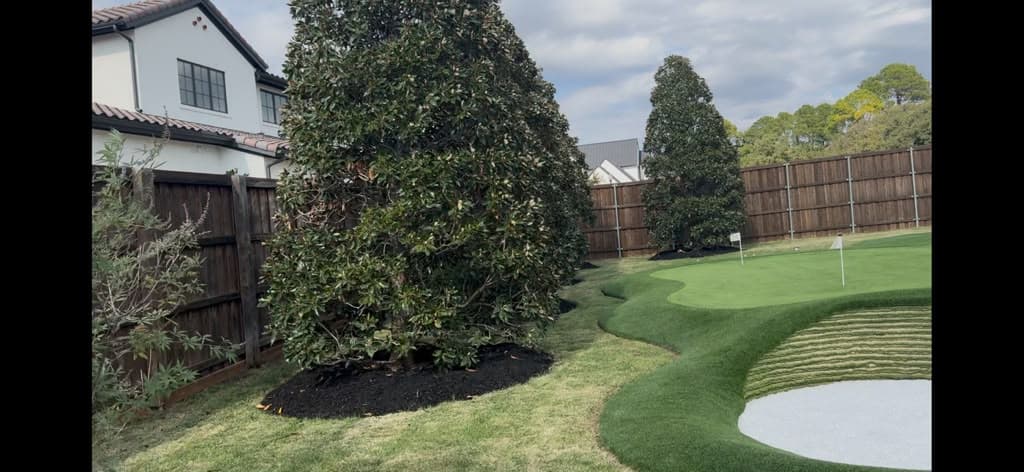
Today, we’re here in Southlake, Texas, evaluating a newly installed landscape containing beautiful magnolia trees and live oaks.
I was called out to evaluate the growing conditions surrounding these trees and discuss how proper planting, drainage, soil structure, and irrigation management can determine whether a landscape thrives or begins declining during its first year.
I’m Henry Friar, ISA Certified Arborist with Arborist USA, and in this video, I want to explain something every homeowner building a new house should understand:
Your landscape’s success begins long before the first tree is planted.
One of the biggest mistakes I see throughout Southlake, Westlake, Keller, and surrounding North Texas communities is homeowners waiting until construction is completed before involving a professional arborist.
By that time, the soil may already be compacted, drainage patterns may have changed, and expensive trees may have been planted in locations that cannot adequately support their root systems.
In some of the luxury landscapes we evaluate, individual specimen magnolias may represent an investment of approximately $8,000–$10,000 per tree.
Losing several trees of this magnitude can become a substantial financial loss.
And in many cases, those losses may have been reduced or prevented through better planning.
That’s why I recommend involving an ISA Certified Arborist during the earliest stages of property development, ideally before final construction and landscape plans are approved.
The objective is simple:
Choose the right tree, for the right location, in the right soil, with the right drainage and irrigation conditions.
Let’s examine the science behind this approach.
⸻
1. Why an ISA Certified Arborist Should Be Involved Before Construction Begins
When homeowners build a new residence, they typically work with architects, engineers, general contractors, landscape architects, and irrigation specialists.
Each professional has an important responsibility.
However, the long-term biological requirements of trees may not receive sufficient attention during early planning.
An ISA Certified Arborist can contribute specialized knowledge about tree physiology, root systems, soil conditions, planting requirements, and preservation of existing trees.
The Importance of Preconstruction Meetings
Before major construction begins, I recommend coordinating a meeting involving the homeowner, general contractor, landscape designer, irrigation contractor, and consulting arborist.
During this meeting, the team should discuss:
- Existing trees that should be preserved.
- Areas where construction may damage root systems.
- Soil conditions and drainage limitations.
- Proposed planting locations.
- Appropriate tree species for the property.
- Irrigation requirements.
- Final grading and elevation changes.
- Equipment access and construction staging.
- Tree protection zones.
- Long-term landscape maintenance.
These discussions can prevent costly mistakes before they occur.
Why Early Planning Saves Money
Imagine purchasing several large specimen magnolias at $8,000–$10,000 each.
If those trees are installed in poorly drained soil, planted too deeply, or subjected to inadequate irrigation, their survival may be compromised.
Replacing one large specimen tree can involve more than the original purchase price.
Removal, equipment access, transportation, replanting, and landscape restoration can add substantial costs.
Investing in professional planning before installation is often far less expensive than replacing a failed landscape.
⸻
2. Soil Testing: Understanding the Growing Environment Before Selecting Trees
One of the first things I recommend is evaluating the soil.
Soil is not simply material that holds a tree upright.
It is a complex physical, chemical, and biological environment that determines how effectively roots can absorb water, oxygen, and nutrients.
Soil Texture and Structure
Soil texture describes the relative proportions of sand, silt, and clay.
Soil structure describes how particles are arranged into aggregates and how pore spaces are distributed.
Both influence water infiltration, drainage, aeration, and root penetration.
Sandy soils generally allow rapid water movement but may have limited water-storage capacity.
Clay-rich soils often retain more water but may drain slowly, especially when compacted.
Loam soils can provide a favorable balance of water retention and aeration when properly structured.
However, no single soil texture is ideal for every tree species.
Soil pH and Nutrient Availability
Soil pH influences the chemical availability of essential nutrients.
This is especially important in North Texas, where alkaline soils are common.
Some trees tolerate alkaline conditions better than others.
Other species may develop nutrient deficiencies, including iron chlorosis, when planted in unsuitable soils.
A laboratory soil analysis can help identify potential limitations before expensive trees are purchased.
Soil Compaction Testing
Construction equipment can compress soil particles and reduce important pore spaces.
This may restrict root growth, reduce oxygen availability, and interfere with water infiltration.
A professional assessment may include soil-profile examination, penetration resistance testing, infiltration observations, and other measurements where warranted.
The results help determine whether soil preparation or remediation is necessary before planting.
The objective is to understand the existing soil before deciding which trees belong in it.
⸻
3. The Right Tree in the Right Place: Matching Species to Site Conditions
Every tree species has different environmental tolerances.
Some tolerate wet soils better than others.
Some perform well in alkaline conditions.
Others require excellent drainage or are particularly sensitive to soil compaction.
Why Tree Selection Matters in Southlake
Southlake landscapes frequently contain a mixture of native clay soils, imported planting materials, engineered drainage systems, and heavily modified construction sites.
A tree that performs well on one property may struggle on another property only a short distance away.
This is why tree selection should consider the actual growing environment rather than appearance alone.
Understanding Mature Tree Size
A tree’s mature height, canopy spread, and root-system requirements should be considered before installation.
Planting large-growing species too close to buildings, retaining walls, utilities, or other trees may create future conflicts.
Proper spacing also improves opportunities for healthy canopy development and reduces unnecessary corrective pruning.
Matching Trees to Drainage Conditions
For species sensitive to prolonged soil saturation, planting locations must provide adequate drainage.
Other species may tolerate periodically wet conditions.
The objective is to select plants whose biological requirements match the site.
A beautiful tree planted in an unsuitable environment can become an expensive problem.
⸻
4. Drainage Planning: Why Landscape Grading Can Determine Tree Survival
One of the most important considerations during new construction is the final landscape grade.
Grading determines how water moves across the property and where it accumulates.
If drainage is poorly designed, water may collect around newly planted trees.
Understanding Root-Zone Saturation
Healthy roots require oxygen for cellular respiration.
Oxygen normally moves through interconnected soil pore spaces.
When soil becomes saturated for prolonged periods, water occupies many of these spaces.
This reduces oxygen diffusion.
The resulting condition is called root-zone hypoxia.
When roots experience prolonged oxygen deficiency, their ability to absorb water and nutrients may decline.
Severe conditions can contribute to fine-root mortality and create opportunities for certain root pathogens.
Why Trees Can Drown Even When Water Is Available
This is something many homeowners find surprising.
A tree can exhibit wilting symptoms even when the surrounding soil is excessively wet.
Why?
Because oxygen-deprived roots may lose their ability to absorb water efficiently.
The result can resemble drought stress, even though the soil contains abundant moisture.
[H3] The Importance of Proper Surface Drainage
Before installing expensive trees, the landscape should be evaluated to determine whether rainfall and irrigation water can move away from sensitive planting areas.
Drainage solutions may include appropriate grading, engineered drainage systems, or raised planting areas.
However, drainage modifications must be designed carefully to avoid directing excess water toward foundations, neighboring properties, or preserved trees.
⸻
5. Planting Depth: Why the Root Flare Must Be Positioned Correctly
One of the most common planting mistakes is installing trees too deeply.
The root flare is the area near the base of the trunk where major structural roots begin extending outward.
For most landscape trees, the root flare should remain visible at or slightly above the surrounding finished grade.
What Happens When a Tree Is Planted Too Deeply?
Deep planting can bury the root flare and portions of the trunk that are not adapted to prolonged soil contact.
This may contribute to poor gas exchange, unfavorable moisture conditions, and increased risk of certain bark or root disorders.
Deep planting can also encourage the development of problematic adventitious or girdling roots in some circumstances.
Can Planting Too High Cause Problems?
Yes.
Although raising the root ball may be appropriate in poorly drained soils, excessive elevation can expose roots to drying and temperature extremes.
Exposed root-ball sides may lose moisture rapidly.
This can interfere with establishment.
The objective is not simply to plant every tree high.
The objective is to position the root flare correctly while providing a suitable root-zone environment and effective drainage.
Our Southlake Live Oak Planting Example
At this property, two previously installed live oaks were lost following problems associated with improper planting and drainage.
During the replacement process, the new live oaks were positioned approximately 7–8 inches above the surrounding grade to address the site’s drainage concerns.
This approach was selected for the particular site conditions.
However, planting height must be evaluated according to root-ball dimensions, soil characteristics, final grading, and drainage performance.
When trees are installed above grade, the surrounding soil should be properly transitioned around the root ball without burying the root flare.
The objective is to prevent prolonged water accumulation around the roots while avoiding excessive exposure and drying of the root ball.
Raised planting can be beneficial in certain poorly drained landscapes, but it must be designed correctly.
⸻
6. Protecting Existing Native Trees During Construction
Newly planted trees are not the only concern.
Many Southlake properties contain mature native trees that homeowners want to preserve.
These may include live oaks, post oaks, red oaks, cedar elms, and other established species.
These trees can provide significant landscape value.
However, construction activities can damage their root systems long before symptoms appear in the canopy.
Why the Root System Needs Protection
Many fine absorbing roots are concentrated within the upper soil profile.
These roots require adequate oxygen, moisture, and nutrients.
Heavy equipment, trenching, grading, and soil storage can damage or destroy them.
Construction can also change drainage patterns and soil elevations.
Establishing Tree Protection Zones
Before construction begins, a qualified arborist should identify trees designated for preservation and establish appropriate tree protection zones.
The drip line—the approximate outer edge of the canopy—can be a useful visual reference.
However, roots frequently extend beyond the drip line.
For this reason, protection zones should be based on tree size, species, condition, site constraints, and the extent of anticipated construction disturbance.
Protective fencing should be installed before equipment enters the site.
Activities That Should Be Restricted
Within designated protection areas, contractors should avoid unauthorized excavation, trenching, grading, equipment parking, material storage, and repeated vehicle traffic.
Even temporary construction activities can cause long-term damage.
Why Construction Damage May Not Appear Immediately
A mature tree may retain green foliage for months or even years after root damage.
Stored carbohydrates and remaining functional roots can temporarily support the canopy.
However, the loss of absorbing roots may eventually contribute to reduced growth, canopy thinning, and branch dieback.
Protecting mature trees during construction is far more effective than attempting to restore severely damaged root systems afterward.
⸻
7. Newly Planted Magnolias: Why Establishment Irrigation Is So Important
The magnolias featured in this Southlake landscape represent a significant investment.
Large specimen magnolias can provide immediate landscape beauty, shade, and privacy.
However, newly transplanted trees require careful irrigation management while their root systems establish.
Understanding Transplant Establishment
When a tree is transplanted, much of its functional root system may remain confined to the original nursery root ball.
Over time, new roots must grow into the surrounding soil.
Until that occurs, the tree may be particularly vulnerable to moisture stress.
Why Large Magnolias Need Careful Water Management
Large magnolias can have substantial foliage surface area.
During hot weather, leaves lose water through transpiration.
The root system must absorb sufficient moisture to replace that loss.
When atmospheric demand exceeds root uptake, the tree may experience water stress.
This can happen even when irrigation is operating.
Understanding Evapotranspiration
Evapotranspiration combines soil evaporation and plant transpiration.
During periods of high temperatures and low humidity, atmospheric moisture demand can increase significantly.
Scientists describe this relationship using vapor pressure deficit.
When vapor pressure deficit rises, water loss from foliage may increase if stomata remain open.
Newly planted trees may struggle to replace that water because their root systems are still developing.
Proper Irrigation During Establishment
Newly planted magnolias often require more frequent monitoring and irrigation than established trees.
However, the correct watering schedule depends on tree size, soil texture, drainage, weather conditions, and irrigation output.
Water must reach the original root ball and surrounding soil.
The root ball should not be allowed to dry excessively.
At the same time, prolonged saturation must be avoided.
The goal is to maintain adequate plant-available moisture while preserving oxygen within the root zone.
⸻
8. Why Nursery Root-Ball Soil and Native Soil Must Be Evaluated Together
One issue that can complicate establishment is the difference between the original nursery root-ball substrate and the surrounding native soil.
A tree may arrive with a root ball containing a soil or growing medium that behaves differently from the landscape soil.
Different Soil Textures Can Create Different Water Conditions
A coarse-textured nursery substrate may drain and dry differently from clay-rich native soil.
The surrounding soil may remain moist while the original root ball becomes relatively dry.
Alternatively, certain planting configurations can restrict drainage and contribute to prolonged saturation.
This is why evaluating only the surrounding landscape soil may not provide a complete picture.
The Importance of Root-Ball Moisture Monitoring
During establishment, soil moisture should be evaluated within the original root ball and in the surrounding soil.
The objective is to determine whether irrigation is reaching the actual root system.
This is particularly important for expensive large-caliper specimen trees.
⸻
9. Soil Aeration and Root-Zone Preparation Before Planting
Construction frequently changes soil structure.
Heavy machinery can compress soil particles and reduce pore spaces.
When these spaces become restricted, water infiltration, drainage, and oxygen movement may be impaired.
Understanding Macropores and Micropores
Macropores are relatively large soil pores that support drainage and gas exchange.
Micropores are smaller pores that contribute to soil moisture retention.
Healthy soil requires an appropriate balance of pore sizes.
Why Roots Need Oxygen
Roots require oxygen for aerobic cellular respiration.
This process supports energy production and essential cellular functions.
When soil becomes severely compacted or saturated, oxygen availability may decline.
Root growth and nutrient uptake can become restricted.
Pneumatic Soil Aeration
Where compaction is identified, pneumatic soil excavation equipment, commonly known as an AirSpade, may be used to loosen selected areas of soil.
When properly performed, pneumatic aeration can improve opportunities for root development, water movement, and gas exchange.
However, the treatment must be selected according to the actual soil conditions.
It should not replace proper grading, drainage design, or construction protection.
⸻
10. The Importance of Coordinating the Landscape Contractor, Irrigation Contractor, and Arborist
Successful landscape installation requires communication.
The arborist, landscape designer, general contractor, and irrigation specialist should understand the project’s planting objectives and site limitations.
Why Coordination Matters
The landscape contractor may select and install trees.
The irrigation contractor determines how water is delivered.
The general contractor manages construction activities and site access.
The arborist evaluates tree requirements, root-zone conditions, and preservation concerns.
When these professionals work together, potential problems can be identified before they become expensive failures.
Important Questions Before Planting
Before installing large specimen trees, the project team should confirm:
- Is the species suitable for the soil and climate?
- Has soil pH and nutrient availability been evaluated?
- Is the planting area adequately drained?
- Is the root flare positioned correctly?
- Has soil compaction been addressed?
- Will irrigation reach the original root ball?
- Are existing trees protected from construction damage?
- Is there sufficient space for mature root and canopy development?
- Who will monitor the trees during establishment?
These questions should be answered before installation whenever possible.
⸻
11. Why the First 12–24 Months Are Critical for Newly Planted Trees
The first year or two following installation can be especially important for large transplanted trees.
During this period, the root system must gradually expand into the surrounding soil.
The time required for establishment varies with species, tree size, climate, soil conditions, and maintenance.
Monitoring During the First Growing Season
Large specimen trees may require several years to become fully established.
Newly planted trees should be monitored for soil moisture, foliage condition, new growth, and signs of stress.
Irrigation should be adjusted according to seasonal conditions.
Avoiding Excessive Fertilization
Newly planted trees do not automatically require high-nitrogen fertilizer.
Nutrient applications should be based on soil testing and plant needs.
Excessive nitrogen can encourage shoot growth that may increase water demand before the root system is adequately established.
Long-Term Plant Healthcare
A professional Plant Healthcare program may include periodic inspections, soil testing, irrigation evaluation, mulching recommendations, and targeted treatments where warranted.
The objective is to support establishment and identify problems early.
⸻
12. Protecting a Landscape Investment Worth Thousands of Dollars
When homeowners invest in luxury landscaping, they often focus on the immediate appearance of the property.
Large magnolias, mature live oaks, and other specimen trees can transform a newly constructed home.
However, the long-term value of those trees depends on proper installation and establishment.
A tree costing $8,000–$10,000 represents a substantial investment.
Losing several trees during the first year can create significant replacement costs.
In many situations, the most valuable investment is not another fertilizer application after decline begins.
It is proper planning before the trees are installed.
Soil testing, drainage evaluation, correct planting depth, irrigation planning, and professional construction coordination can prevent many avoidable landscape failures.
⸻
13. The Arborist USA Approach to New Construction Tree Care in Southlake
At Arborist USA, we recommend beginning the process before construction whenever possible.
Phase One — Preconstruction Consultation
Evaluate existing trees, soil conditions, drainage, and proposed landscape locations.
Phase Two — Tree Selection and Planting Design
Coordinate with the landscape designer to select appropriate species and determine suitable planting locations.
Phase Three — Tree Protection During Construction
Establish protection zones around preserved trees and monitor activities that could damage roots or alter drainage.
Phase Four — Soil Preparation and Installation
Evaluate soil compaction, planting depth, root-ball conditions, and final grading.
Phase Five — Irrigation and Establishment Monitoring
Develop an appropriate irrigation strategy and monitor soil moisture during the establishment period.
Phase Six — Long-Term Plant Healthcare
Continue periodic evaluations and make adjustments based on tree growth, soil conditions, and environmental stress.
⸻
Final Thoughts: Build the Landscape Correctly Before You Build Problems Into It
One of the most important lessons I want homeowners to take away from this Southlake project is that successful tree care begins with planning.
The magnolias and live oaks featured in this landscape represent a significant investment.
Their long-term health depends on much more than simply placing them in the ground and turning on an irrigation system.
The soil must be suitable.
Drainage must function correctly.
The root flare must be positioned appropriately.
Irrigation must reach the actual root system.
And existing native trees must be protected throughout construction.
Hiring an ISA Certified Arborist before construction begins can help prevent costly mistakes that may not become visible until months or years later.
At Arborist USA, our mission is to combine professional arboricultural knowledge, soil science, and practical field experience to help homeowners preserve and protect their landscapes.
Schedule a New Construction Tree Consultation in Southlake, TX
Are you building a new home or planning a major landscape renovation in Southlake, Westlake, Keller, Trophy Club, or surrounding North Texas communities?
Before purchasing expensive specimen trees or beginning major construction, consider having your soil, drainage, and planting plans evaluated by an ISA Certified Arborist.
ARBORIST USA
Phone: 817-880-6130
Email: [email protected]
Website: www.arboristusa.com
Henry G Friar
ISA Certified Arborist® TX-270627A
TCIA Member #268065
Science-Based Tree Preservation, Plant Healthcare, and New Construction Landscape Consulting.
Are you building a new home in Southlake, Texas, or investing thousands of dollars in newly planted trees? Before construction begins, there’s one professional you should consider bringing into the planning process: an ISA Certified Arborist! Today, we’re in Southlake, Texas, evaluating a beautiful residential landscape featuring large specimen magnolias and newly planted live oaks.